
Roller bearings are important mechanical components used in machines where smooth and efficient movement is required. They help reduce friction between moving parts and allow shafts, wheels, gears, and other components to rotate with less resistance. From automobiles and industrial machinery to conveyors and manufacturing equipment, bearings play an important role in keeping machines running efficiently.
A roller ball bearing is designed to support moving components while reducing friction and controlling the movement between different machine parts. Different bearing designs are available for different applications, depending on factors such as load, speed, operating temperature, available space, and required service life.
In this blog, we will understand what roller bearings are, how they work, their benefits, applications, and how they differ from a needle roller bearing.
What Is a Roller Ball Bearing?
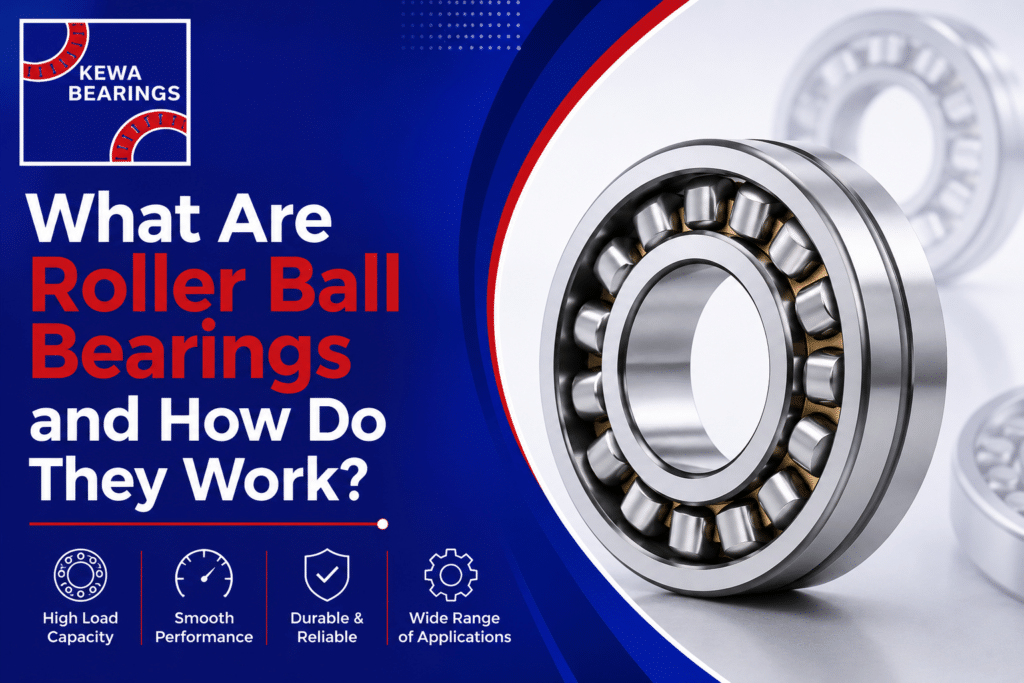
A roller ball bearing uses rolling elements between an inner and outer ring to reduce friction and support smooth shaft movement. Its cage keeps the rolling elements properly positioned during operation.
By replacing sliding contact with rolling motion, bearings reduce heat, wear, and resistance. Different bearing designs are available for various applications and load requirements. Some are designed mainly for radial loads, while others can handle both radial and axial loads.
How Does a Roller Ball Bearing Work?
The roller bearing works by using rolling elements between the inner and outer rings to reduce friction and support smooth movement. As the shaft rotates, the rolling elements move smoothly while the cage keeps them properly spaced. This reduces energy loss, vibration, and wear during operation.
Proper lubrication with grease or oil further reduces friction and heat. It also protects the bearing surfaces from premature wear, helping the bearing deliver reliable performance and a longer service life.
Main Components of a Roller Bearing
Understanding the basic components can make it easier to understand how a bearing works.
The inner ring is usually mounted on the rotating shaft. It provides the surface against which the rolling elements move.
The outer ring is fitted into the housing and provides another rolling surface for the rolling elements.
The rolling elements are responsible for converting sliding movement into rolling movement. Their design depends on the type of bearing.
The cage keeps the rolling elements evenly spaced and helps maintain proper movement inside the bearing.
Finally, lubrication helps reduce friction and heat. Proper lubrication is important for maintaining bearing performance and extending service life.
What Are the Advantages of Roller Bearings?
Roller bearings reduce friction, improve efficiency, and support heavy loads in different applications. They provide smooth, reliable operation while reducing wear on machine components.
Available in various sizes and designs, roller bearings can be used in both light-duty and heavy industrial machinery. With proper installation and maintenance, they can also offer longer service life and help reduce machine downtime.
What Is a Needle Roller Bearing?
A needle roller bearing uses long, thin cylindrical rollers in a compact design. It can handle high radial loads while requiring less installation space.
These bearings are commonly used in automotive systems, transmissions, gearboxes, pumps, and industrial machinery where space is limited. Their compact structure provides efficient load support without taking up much space. With proper installation and lubrication, they can deliver reliable performance and longer service life.
Roller Ball Bearing vs. Needle Roller Bearing
Although both bearing types use rolling elements, their construction and applications can be different.
A roller ball bearing can be used for applications where smooth rotation, friction reduction, and load support are required. Depending on the specific design, it can be suitable for different types of machinery and operating conditions.
A needle roller bearing, on the other hand, uses long, thin rollers and is particularly useful when radial load capacity is needed in a limited space.
The correct bearing should not be selected simply because it is smaller, larger, or less expensive. The operating conditions of the machine should always be considered.
Factors such as load type, shaft speed, available space, temperature, lubrication, and expected operating life should be evaluated before selecting a bearing.
Where Are Roller Bearings Used?
Roller bearings are widely used in automobiles, electric motors, conveyors, pumps, gearboxes, construction equipment, and industrial machinery. They help rotating components move smoothly while reducing friction and supporting loads.
The right bearing type depends on the machine’s design, load, speed, and operating conditions. Proper selection helps ensure efficient and reliable performance.
Factors to Consider When Choosing a Bearing
Choosing the correct bearing is important for machine performance and reliability. Before purchasing a bearing, it is necessary to understand the requirements of the application.
Load Capacity
First, determine how much load the bearing needs to handle. Radial loads act perpendicular to the shaft, while axial loads act along the shaft. Some applications may require the bearing to handle a combination of both.
Operating Speed
The speed at which the shaft rotates also affects bearing selection. High-speed applications may require bearings specifically designed to operate efficiently at higher speeds while controlling heat and friction.
Available Space
Installation space can be an important factor, particularly in compact machinery. A needle roller bearing can be useful when there is limited radial space but a high radial load needs to be supported.
Operating Temperature
Temperature can affect lubrication and bearing performance. If a bearing operates continuously at high temperatures, the selected bearing and lubricant should be suitable for those conditions.
Lubrication
Proper lubrication reduces friction and helps protect the bearing from wear. The type and amount of lubricant required may vary depending on the bearing and application.
Operating Environment
Dust, moisture, chemicals, vibration, and other contaminants can affect bearing performance. Machines operating in harsh environments may require appropriate seals or specialized bearing solutions.
Importance of Proper Bearing Installation
Even a high-quality bearing may fail early if it is not installed correctly. Improper installation can cause damage to the bearing rings, rolling elements, or other machine components.
The bearing should be installed using suitable tools and methods. Excessive force should be avoided because it can damage internal components.
Correct alignment is also important. Misalignment can create uneven loads and increase friction, vibration, and wear.
Before installation, the shaft, housing, and bearing should also be checked for damage, dirt, or other issues that could affect performance.
Importance of Bearing Lubrication and Maintenance
Regular maintenance can help improve bearing life and machine reliability. Lubrication is one of the most important maintenance requirements.
Insufficient lubrication can increase friction and temperature, while excessive lubrication can also create problems in certain applications. Therefore, the correct lubricant and lubrication schedule should be followed.
Regular inspections can help identify early signs of bearing problems. Unusual noise, vibration, overheating, or increased resistance during rotation may indicate that a bearing requires inspection or replacement.
Keeping bearings clean and protecting them from contamination can also help maintain performance.
Common Causes of Bearing Failure
Bearing failure can happen for several reasons. One common cause is incorrect installation. Excessive force, poor alignment, or improper fitting can damage the bearing.
Poor lubrication is another major cause. Without sufficient lubrication, friction and heat can increase, leading to premature wear.
Contamination from dust, dirt, water, or chemicals can also damage bearing surfaces. Overloading the bearing beyond its rated capacity can create excessive stress and shorten its service life.
Using the wrong bearing for an application may also lead to premature failure. This is why bearing selection should always be based on actual machine requirements.
How Quality Bearings Improve Machine Performance
Quality bearings can improve the performance and reliability of rotating machinery by reducing friction and supporting moving components. A roller ball bearing can help ensure smooth operation, while a needle roller bearing is useful for applications requiring high radial load capacity in compact spaces.
Reliable bearings can also reduce unexpected downtime, maintenance costs, and premature component failure. Choosing the right bearing from a dependable supplier is essential for efficient and long-lasting machine performance.
Why Choose the Right Bearing Supplier?
A bearing may be a small component, but it plays an important role in machine efficiency and reliability. Choosing the right roller ball bearing or needle roller bearing can help ensure smooth operation and reduce maintenance issues.
A reliable supplier can guide you based on bearing specifications, dimensions, load capacity, and application requirements. Kewa Bearings provides bearing solutions for various industrial and mechanical needs, helping customers select the right product for dependable performance.
Conclusion
A roller ball bearing reduces friction and helps rotating parts move smoothly. A needle roller bearing is ideal for high radial loads in compact spaces.
Choosing the right bearing based on load, speed, space, and operating conditions is important for reliable performance. Proper installation, lubrication, and maintenance can also extend bearing life and reduce downtime. Kewa Bearings offers bearing solutions for various industrial applications.
FAQs
1. What is a roller ball bearing?
A roller ball bearing reduces friction and supports smooth movement between rotating parts.
2. How does a roller ball bearing work?
It uses rolling elements to reduce friction between moving surfaces.
3. What is a needle roller bearing?
A needle roller bearing uses thin, long rollers to handle high radial loads.
4. What is the purpose of roller bearings?
They reduce friction and support moving machine components.
5. Where are roller bearings used?
They are used in automobiles, conveyors, pumps, gearboxes, and industrial machinery.
6. What is the difference between roller and needle roller bearings?
Needle roller bearings are more compact and designed for high radial loads.
7. Why is bearing lubrication important?
Lubrication reduces friction, heat, and wear.
8. What causes bearing failure?
Overloading, poor lubrication, contamination, and improper installation can cause failure.
9. How can bearing life be increased?
Proper installation, lubrication, and regular maintenance can extend bearing life.
10. How do I choose the right bearing?
Consider load, speed, space, temperature, and operating conditions.
Pingback: Where Are Tapered Roller Bearings Used? - KEWA BEARINGS