
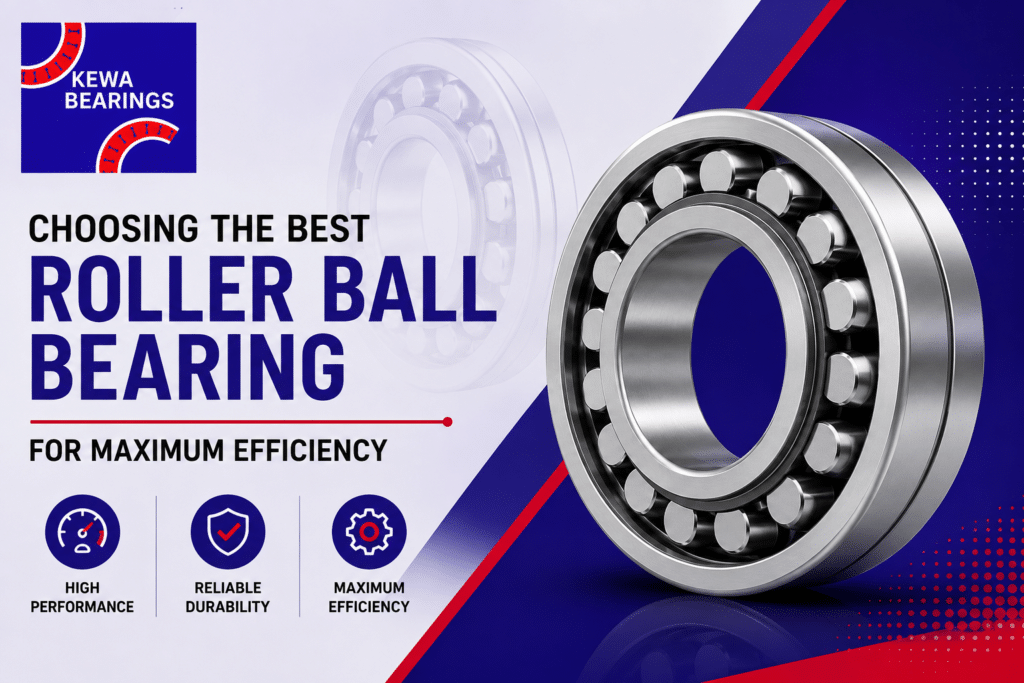
When it comes to industrial machinery, efficiency is everything. Whether you operate manufacturing equipment, mining machines, agricultural tools, or heavy-duty industrial systems, the right bearing plays a vital role in ensuring smooth performance. Selecting the correct roller ball bearing can improve machine reliability, reduce downtime, and extend equipment life while lowering maintenance costs.
At Kewa Bearings, we understand that every application has unique requirements. That’s why choosing the right bearing isn’t just about size—it’s about matching the bearing to the load, operating conditions, and performance expectations. Among the various options available, spherical roller bearings are one of the most trusted solutions for demanding industrial environments due to their exceptional durability and ability to handle heavy loads.
In this guide, we’ll explain everything you need to know about selecting the best roller ball bearing for maximum efficiency and why spherical roller bearings are often the preferred choice for heavy-duty applications.
What Is a Roller Ball Bearing?
A roller ball bearing is a mechanical component designed to reduce friction between moving parts while supporting rotating shafts. Bearings enable smooth motion, minimize wear, and improve machine efficiency.
Depending on the application, bearings are designed to handle radial loads, axial loads, or both. The internal rolling elements may be balls or rollers, each offering different advantages based on operating conditions.
The right bearing improves:
- Machine performance
- Operational efficiency
- Equipment lifespan
- Energy savings
- Maintenance intervals
Without a quality bearing, machinery experiences excessive friction, heat generation, vibration, and premature component failure.
Understanding Spherical Roller Bearings
Among the many industrial bearing types, spherical roller bearings are specifically engineered for heavy-duty operations.
Unlike standard bearings, they feature two rows of barrel-shaped rollers that run on a common spherical raceway. This unique design allows the bearing to automatically compensate for shaft misalignment without affecting performance.
This self-aligning capability makes spherical roller bearings ideal for equipment operating under high loads, vibration, and harsh environmental conditions.
Industries commonly using these bearings include mining, cement, steel plants, construction, power generation, paper mills, agriculture, and material handling.
Why Choosing the Right Roller Ball Bearing Matters
Many businesses underestimate the importance of selecting the correct roller ball bearing. A poorly selected bearing may fit physically but perform inefficiently, resulting in:
- Higher energy consumption
- Increased machine vibration
- Frequent breakdowns
- Reduced production efficiency
- Unexpected maintenance costs
- Shorter equipment life
Choosing the correct bearing ensures maximum productivity while protecting valuable machinery investments.
Factors to Consider When Selecting a Roller Ball Bearing
1. Load Capacity
The first factor is the amount of load your equipment carries.
Some applications involve light loads, while others continuously handle extremely heavy radial or axial forces.
For high-load applications, spherical roller bearings are an excellent choice because they are specifically designed to support very heavy radial loads along with moderate axial loads.
2. Operating Speed
Different bearings perform differently at various rotational speeds.
High-speed machinery often requires bearings with lower friction, while slower heavy-duty machines benefit from bearings designed for greater load capacity.
Always choose a roller ball bearing that matches your equipment’s operating speed recommendations.
3. Misalignment Conditions
Perfect shaft alignment isn’t always possible.
Machine vibration, installation errors, thermal expansion, or shaft deflection can create misalignment over time.
This is where spherical roller bearings offer a major advantage. Their self-aligning design accommodates angular misalignment without significantly reducing performance or service life.
4. Operating Environment
Industrial environments are rarely clean.
Dust, moisture, chemicals, extreme temperatures, and heavy contaminants can all affect bearing performance.
Choose bearings with appropriate sealing and lubrication features for your operating environment to ensure long-lasting reliability.
5. Lubrication Requirements
Proper lubrication reduces friction and prevents premature wear.
Before selecting a bearing, determine:
- Grease lubrication
- Oil lubrication
- Automatic lubrication systems
Quality lubrication significantly extends bearing service life.
6. Bearing Material Quality
Not all bearings are manufactured with the same quality standards.
Premium-grade bearing steel provides:
- Better hardness
- Higher fatigue resistance
- Greater wear resistance
- Improved dimensional accuracy
Kewa Bearings manufactures products designed for long-lasting industrial performance.
7. Maintenance Requirements
Low-maintenance bearings reduce downtime and operating costs.
Selecting the appropriate roller ball bearing helps maintenance teams spend less time on repairs and more time improving productivity.
Advantages of Spherical Roller Bearings
There are several reasons why industries prefer spherical roller bearings for demanding applications.
Exceptional Load Capacity
These bearings handle extremely heavy radial loads while also supporting axial loads in both directions.
Self-Alignment
They automatically compensate for shaft misalignment, reducing stress on machinery.
High Durability
Designed for tough industrial conditions, they perform reliably even under constant heavy-duty operation.
Reduced Downtime
Longer bearing life means fewer replacements and reduced maintenance interruptions.
Better Shock Resistance
Heavy industrial machinery often experiences sudden impact loads. Spherical roller bearings absorb these forces more effectively than many other bearing types.
Improved Machine Efficiency
Lower friction and smoother rotation contribute to higher operational efficiency and reduced energy consumption.
Applications of Roller Ball Bearings
A quality roller ball bearing is used across numerous industries, including:
Mining Equipment
Mining machinery operates under extremely heavy loads, making reliable bearings essential for continuous production.
Cement Plants
Rotary kilns, crushers, conveyors, and grinding mills depend on durable bearings capable of handling harsh environments.
Steel Industry
Steel manufacturing equipment operates under high temperatures and heavy loads where dependable bearings are critical.
Construction Machinery
Excavators, loaders, cranes, and road construction equipment require bearings that withstand vibration and impact.
Agriculture
Harvesters, tractors, seeders, and irrigation equipment rely on long-lasting bearings for reliable field performance.
Power Plants
Generators, turbines, conveyors, and cooling systems require precision bearings for uninterrupted operation.
Material Handling
Conveyors, forklifts, and industrial handling systems benefit from efficient bearing performance that minimizes downtime.
Common Signs Your Bearing Needs Replacement
Even the best roller ball bearing eventually reaches the end of its service life.
Watch for these warning signs:
- Unusual machine noise
- Increased vibration
- Excessive operating temperature
- Lubricant leakage
- Visible wear or corrosion
- Shaft instability
- Reduced machine efficiency
Replacing worn bearings early prevents costly equipment damage.
Tips to Maximize Bearing Efficiency
Choosing the right bearing is only the beginning. Proper maintenance ensures maximum performance.
Inspect bearings regularly for wear and contamination. Follow manufacturer lubrication schedules using high-quality lubricants. Avoid overloading equipment beyond its rated capacity. Ensure correct installation using appropriate tools to prevent damage. Keep bearings clean by protecting them from dust and moisture. Monitor machine vibration and operating temperature to detect issues before they become major failures.
Using these best practices, helps stretch the lifespan of bearings and keeps the equipment running at optimal efficiency.
Why Choose Kewa Bearings?
Kewa Bearings has built a reputation for delivering dependable bearing solutions across diverse industries.
Customers choose Kewa Bearings because of:
- Premium-quality manufacturing
- Excellent load-carrying performance
- Durable industrial-grade materials
- Precision engineering
- Reliable product availability
- Competitive pricing
- Consistent product quality
- Expert technical support
Whether you require roller ball bearing solutions for general machinery or heavy-duty spherical roller bearings for demanding industrial environments, Kewa Bearings provides products designed for long-term reliability and maximum performance.
Conclusion
Selecting the right roller ball bearing directly impacts machine efficiency, operating costs, and equipment lifespan. By considering factors such as load capacity, operating speed, alignment, lubrication, environmental conditions, and material quality, businesses can significantly improve productivity while reducing maintenance expenses.
For heavy-duty industrial applications, spherical roller bearings continue to be one of the most dependable choices due to their superior load capacity, self-aligning capability, and exceptional durability.
At Kewa Bearings, we are committed to helping industries achieve reliable performance with precision-engineered bearing solutions. Investing in high-quality bearings today ensures smoother operations, longer equipment life, and greater efficiency for years to come.
Frequently Asked Questions (FAQs)
1. What is a roller ball bearing?
A roller ball bearing is a bearing designed to reduce friction and support rotating shafts while carrying radial, axial, or combined loads.
2. What are spherical roller bearings used for?
Spherical roller bearings are commonly used in mining, construction, cement plants, steel mills, agriculture, and other heavy-duty industrial applications.
3. Why are spherical roller bearings preferred for heavy loads?
They offer high radial load capacity, support axial loads, compensate for shaft misalignment, and perform well in harsh environments.
4. How do I choose the right roller ball bearing?
Consider load capacity, operating speed, shaft alignment, lubrication requirements, environmental conditions, and bearing quality before selecting one.
5. How often should bearings be replaced?
Replacement depends on operating conditions, maintenance practices, and load. Regular inspections help identify wear before failure occurs.
6. Can improper lubrication damage bearings?
Yes. Poor lubrication increases friction, heat, wear, and can significantly reduce bearing life.
7. What causes bearing failure?
Common causes include contamination, overload, improper installation, insufficient lubrication, corrosion, and misalignment.
8. Do spherical roller bearings require frequent maintenance?
No. With proper lubrication and regular inspections, they offer long service life and relatively low maintenance.
9. Which industries benefit most from spherical roller bearings?
Industries such as mining, cement, steel, construction, power generation, agriculture, and material handling benefit greatly from their durability.
10. Why should I choose Kewa Bearings?
Kewa Bearings offers high-quality bearing solutions with excellent durability, precision engineering, competitive pricing, and dependable customer support for industrial applications.
Pingback: Applications of Needle Ball Bearings - KEWA BEARINGS