
Heavy-duty machinery works in some of the toughest industrial environments. From mining and construction to cement plants, steel manufacturing, agriculture, and material handling, equipment operates under high loads, continuous vibration, and harsh working conditions. To keep these machines running efficiently, selecting the right bearing is essential.
Among the many bearing types available, spherical roller bearings are one of the most reliable choices for demanding applications. Their unique design allows them to handle heavy radial and axial loads while compensating for shaft misalignment. However, choosing the right spherical roller bearing requires understanding several important factors, including load capacity, operating conditions, lubrication, and bearing dimensions.
In this guide, we’ll explain everything you need to know about selecting the right bearing for heavy-duty equipment and how Kewa Bearings delivers dependable solutions for industrial applications.
What Are Spherical Roller Bearings?
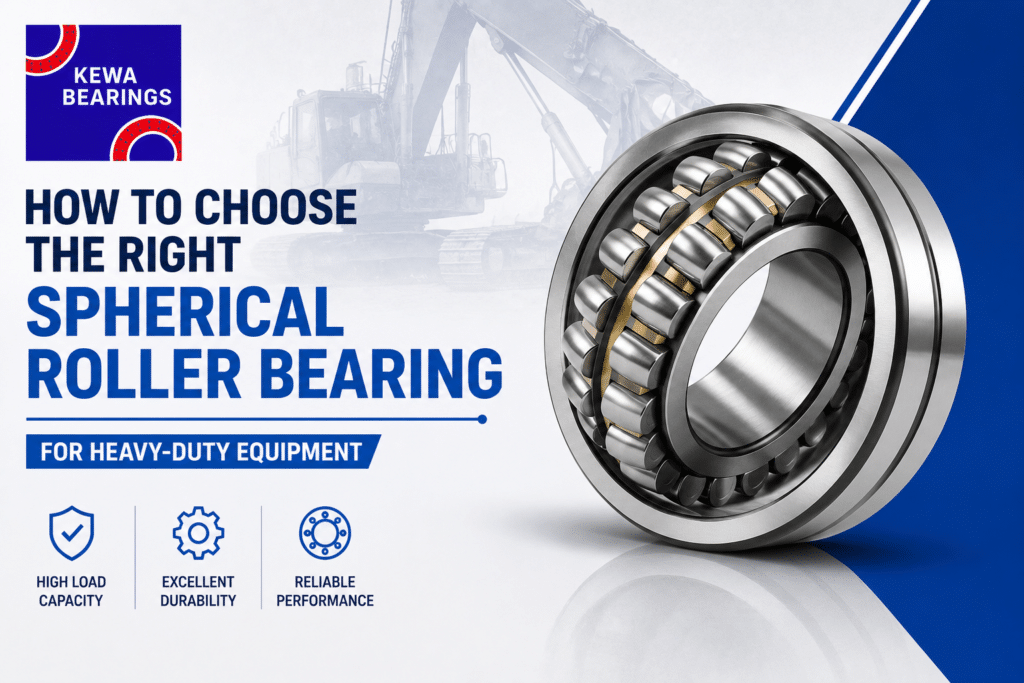
Spherical roller bearings are self-aligning bearings with two rows of symmetrical rollers and a common spherical raceway in the outer ring. This design enables the bearing to automatically compensate for shaft misalignment while maintaining excellent load-carrying performance.
Unlike standard roller bearings, a spherical roller bearing can support both heavy radial loads and moderate axial loads in either direction, making it suitable for demanding industrial machinery.
Why Are Spherical Roller Bearings Used in Heavy-Duty Equipment?
Heavy-duty machines operate under extreme pressure, high temperatures, shock loads, and continuous operation. Bearings used in these environments must withstand these conditions without frequent failures.
Spherical roller bearings are preferred because they offer:
- High radial load capacity
- Ability to handle axial loads
- Self-aligning design
- Resistance to vibration and shock
- Long service life
- Reliable operation in harsh environments
- Reduced maintenance requirements
These features make them ideal for industries where machine downtime can be expensive.
Factors to Consider When Choosing the Right Spherical Roller Bearing
Selecting the correct bearing involves more than simply matching dimensions. Here are the most important factors to evaluate.
1. Understand the Load Requirements
The first step is determining the type and magnitude of loads your equipment experiences.
Heavy industrial machines typically generate:
- High radial loads
- Moderate axial loads
- Combined loads
- Shock or impact loads
Spherical roller bearings are specifically designed to perform well under these demanding conditions. Selecting a bearing with the proper load rating ensures longer operating life and improved reliability.
2. Check the Shaft Size
The bearing bore must precisely match the shaft diameter.
A bearing with an incorrect bore size can cause:
- Excessive vibration
- Misalignment
- Premature wear
- Reduced machine efficiency
Always measure the shaft accurately before selecting a spherical roller bearing.
3. Consider Operating Speed
Not all bearings are designed for the same rotational speed.
Before purchasing, consider:
- Maximum operating RPM
- Continuous operating speed
- Start-stop frequency
Choosing a bearing suitable for your equipment’s speed prevents overheating and extends service life.
4. Evaluate Misalignment Conditions
One of the biggest advantages of spherical roller bearings is their ability to compensate for shaft and housing misalignment.
Misalignment commonly occurs because of:
- Installation errors
- Shaft deflection
- Heavy loads
- Machine vibration
- Foundation movement
Instead of creating excessive stress, the bearing automatically adjusts to maintain smooth operation.
5. Assess the Working Environment
Industrial environments vary significantly. Some involve dust, moisture, chemicals, or high temperatures.
Consider whether the bearing will operate in:
- Mining sites
- Cement plants
- Steel mills
- Agricultural equipment
- Paper industries
- Construction machinery
Choosing the right sealing arrangement and lubrication method is essential for harsh environments.
6. Select the Correct Internal Clearance
Bearing clearance affects operating temperature and performance.
Too little clearance can cause:
- Overheating
- Increased friction
- Premature failure
Too much clearance may result in:
- Vibration
- Reduced accuracy
- Lower bearing life
Selecting the appropriate internal clearance improves reliability.
7. Choose the Right Lubrication
Proper lubrication is one of the most important factors affecting bearing life.
Lubrication helps:
- Reduce friction
- Minimise wear
- Prevent corrosion
- Dissipate heat
- Protect against contamination
Whether using grease or oil lubrication, always follow the manufacturer’s recommendations for your spherical roller bearing.
8. Consider Bearing Material Quality
High-quality materials significantly improve bearing durability.
Premium spherical roller bearings are manufactured using:
- High-grade bearing steel
- Precision heat treatment
- Superior machining processes
- High-quality cages
Better materials result in longer service life and improved performance under heavy loads.
9. Verify Dimensional Accuracy
Precision manufacturing ensures smooth rotation and proper load distribution.
Check that the bearing meets the established international norms for:
- Bore diameter
- Outside diameter
- Width
- Roundness
- Surface finish
Accurate dimensions help reduce vibration a lot, and it also boosts how well the equipment works in practice.
10. Buy from a Trusted Bearing Manufacturer
The quality of the manufacturer is just as important as the bearing specification.
A reliable supplier provides:
- Consistent product quality
- Technical guidance
- Wide product availability
- Quality testing
- Industry expertise
Kewa Bearings supplies dependable bearing solutions designed for demanding industrial applications.
Common Applications of Spherical Roller Bearings
Because of their strength and versatility, spherical roller bearings are widely used across multiple industries.
Common applications include:
- Crushers
- Vibrating screens
- Conveyors
- Gearboxes
- Electric motors
- Wind turbines
- Mining equipment
- Cement machinery
- Agricultural machinery
- Paper mills
- Steel plants
- Material handling systems
These applications demand bearings capable of operating continuously under heavy loads.
Signs You May Need a New Spherical Roller Bearing
Even high-quality bearings eventually wear out.
Watch for these warning signs:
- Unusual vibration
- Excessive noise
- Increased operating temperature
- Lubricant leakage
- Shaft misalignment
- Visible wear or damage
- Reduced machine performance
Replacing a worn spherical roller bearing before complete failure helps avoid expensive downtime.
Tips to Maximise Bearing Life
Proper maintenance can significantly increase bearing lifespan.
Follow these best practices:
- Install bearings correctly.
- Use proper lubrication intervals.
- Keep contaminants away.
- Inspect bearings regularly.
- Monitor operating temperatures.
- Avoid overloading equipment.
- Replace damaged seals promptly.
- Use genuine replacement bearings.
Routine maintenance helps maintain consistent machine performance.
Why Choose Kewa Bearings?
Kewa Bearings is committed to providing reliable bearing solutions for demanding industrial applications. Every bearing is manufactured with precision engineering to ensure durability, efficiency, and dependable performance.
When you choose Kewa Bearings, you benefit from:
- High-quality manufacturing standards
- Excellent load-carrying capacity
- Reliable performance under harsh conditions
- Long operational life
- Wide product availability
- Cost-effective industrial solutions
- Trusted customer support
Whether you need bearings for mining equipment, construction machinery, agriculture, cement plants, or manufacturing industries, Kewa Bearings offers dependable products designed to keep your operations running smoothly.
Conclusion
Selecting the right spherical roller bearings is essential for improving equipment reliability, reducing maintenance costs, and extending machine life. Factors such as load capacity, shaft size, operating speed, lubrication, material quality, and working environment all play an important role in choosing the right bearing.
A properly selected spherical roller bearing delivers better performance, reduces downtime, and helps maximise productivity in demanding industrial environments. By partnering with a trusted manufacturer like Kewa Bearings, businesses can invest in high-quality bearing solutions that provide long-lasting performance even under the toughest operating conditions.
Frequently Asked Questions (FAQs)
1. What are spherical roller bearings used for?
Spherical roller bearings are used for heavy-duty machinery, especially when it must handle high radial loads and moderate axial loads, as well as vibration in real life and some shaft misalignment.
2. What makes a spherical roller bearing different from other bearings?
A spherical roller bearing has a self-aligning design that compensates for shaft misalignment while supporting heavy loads.
3. Which industries commonly use spherical roller bearings?
Mining, construction, cement, steel, agriculture, paper manufacturing, conveyors, and material handling industries commonly use these bearings.
4. Can spherical roller bearings handle axial loads?
Yes. They can support heavy radial loads along with moderate axial loads in both directions.
5. How long do spherical roller bearings last?
Their lifespan depends on load, lubrication, installation, maintenance, and operating conditions. Proper care significantly increases bearing life.
6. Why is lubrication important for spherical roller bearings?
Lubrication reduces friction, minimises wear, prevents overheating, protects against corrosion, and extends bearing life.
7. How do I know if my bearing needs replacement?
Signs include unusual noise, vibration, overheating, lubricant leakage, excessive wear, and reduced machine performance.
8. What causes spherical roller bearing failure?
Common causes include poor lubrication, contamination, incorrect installation, excessive loading, and inadequate maintenance.
9. Are spherical roller bearings suitable for high-vibration equipment?
Yes. Their design makes them highly suitable for vibrating screens, crushers, conveyors, and other heavy-duty machinery.
10. Why should I choose Kewa Bearings?
Kewa Bearings offers high-quality, durable, and precision-engineered bearing solutions designed to deliver reliable performance, longer service life, and reduced maintenance costs across various industrial applications.