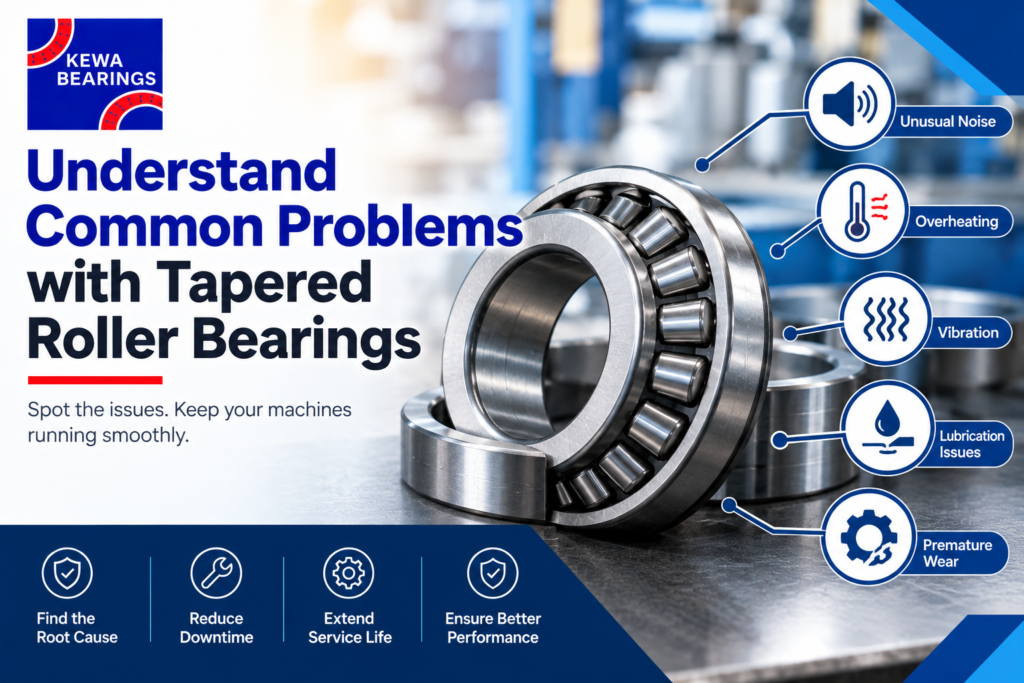
Bearings play an important role in industrial machinery, automotive systems, and heavy-duty equipment. They also support heavy loads, reduce friction in moving parts, and promote smooth movement. While useful, the efficiency of bearings decreases if they are installed incorrectly, loaded too heavily, poorly lubricated, or poorly maintained.
Tapered roller bearings are widely used in applications that require reliable support for both radial and axial loads. Despite their strength and durability, these bearings can develop problems that affect machine efficiency and operating life. Understanding the common issues associated with a tapered ball bearing and tapered roller bearings can help users identify early warning signs and take suitable corrective measures.
Kewa Bearings focuses on providing dependable bearing solutions for different industrial and automotive applications. With proper product selection, installation, and maintenance, businesses can improve equipment performance and reduce unexpected downtime.
What Are Tapered Roller Bearings?
Tapered roller bearings are designed with conical rollers and raceways that allow them to support combined radial and axial loads. Their design distributes loads effectively, making them suitable for applications that require stability and durability under demanding operating conditions.
These bearings are commonly used in vehicle wheel hubs, gearboxes, industrial machinery, agricultural equipment, and heavy-duty transportation systems. They are particularly useful in applications where components experience forces from multiple directions.
Although a tapered ball bearing and a tapered roller bearing may serve similar purposes in certain applications, they have different rolling-element designs. Tapered roller bearings use conical rollers, while tapered ball bearings use spherical balls. Selecting the correct bearing type depends on load requirements, operating speed, alignment, and application conditions.
Common Problems with Tapered Roller Bearings
1. Improper Bearing Installation
Fitting a bearing improperly is the leading cause for premature failure. Excessive force during the process can damage bearing rollers and raceways. In addition, using improper equipment to install the bearing components can lead to failure.
Improper mounting can also affect bearing alignment and internal clearance. As a result, the bearing may produce unusual noise, generate excess heat, or experience accelerated wear.
Bearing manufacturer installation guides should always be used and technicians should be equipped with appropriate tools to help with mounting bearing systems. Good practices ensure that the bearing systems operate in the way intended and help to avoid accuracy issues.
2. Insufficient or Incorrect Lubrication
Rollers and raceways require some lubricant in order to decrease the friction between them. If the amount of lubricant in the bearing is insufficient or if the type of lubricant used is inappropriate, the metal parts will be able to touch one another and this will lead to increased wear.
Poor lubrication can cause overheating, surface damage, and reduced bearing life. Excessive lubrication may also create problems by increasing friction and operating temperatures, particularly at higher speeds.
Whether selecting a tapered ball bearing or a tapered roller bearing, users should choose the recommended lubricant and follow the specified lubrication intervals. Regular inspections can help identify lubricant contamination, leakage, or degradation before serious damage occurs.
3. Excessive Operating Loads
Every bearing is designed to operate within specified load limits. When equipment places excessive radial or axial loads on a bearing, the rollers and raceways may experience high contact stress.
Overloading can lead to surface fatigue, permanent deformation, cracks, and premature failure. Incorrect bearing selection or unsuitable preload settings may also contribute to excessive loading.
Businesses should evaluate actual operating conditions before choosing a bearing. Selecting an appropriate tapered ball bearing or tapered roller bearing according to the manufacturer’s load ratings can help prevent unnecessary stress and improve equipment reliability.
4. Overheating During Operation
Excessive operating temperature is another common bearing problem. It may result from insufficient lubrication, excessive preload, incorrect installation, overloading, or poor heat dissipation.
When a bearing operates at elevated temperatures for extended periods, lubricant performance may deteriorate. Operating the equipment will cause the components to increase in temperature and wear more. Inspectors should monitor the temperature of the bearing while performing equipment maintenance checks. If overheating occurs repeatedly, the underlying cause should be identified instead of relying only on temporary cooling measures.
5. Contamination from Dust and Moisture
Industrial environments often expose bearings to dust, dirt, water, and other contaminants. When these particles enter the bearing assembly, they can damage rolling surfaces and interfere with smooth rotation.
Moisture can also encourage corrosion, particularly when protective seals are damaged or lubrication is inadequate. Contamination may cause vibration, unusual noise, rough operation, and reduced service life.
Proper sealing and regular cleaning of surrounding equipment can reduce these risks. A tapered ball bearing or tapered roller bearing should also be stored in a clean, dry environment before installation to prevent avoidable contamination.
6. Misalignment and Incorrect Preload
Tapered roller bearings require appropriate alignment and adjustment to operate effectively. Misalignment can cause uneven load distribution, while excessive or insufficient preload can affect bearing performance.
Excessive preload may increase friction and temperature, whereas insufficient adjustment can lead to unwanted movement, vibration, and unstable operation.
During installation, technicians should follow the recommended adjustment procedures and verify the specified endplay or preload requirements. Correct alignment helps distribute loads evenly and supports consistent machine performance.
7. Unusual Noise and Vibration
Noise and vibration are important warning signs of bearing problems. A properly installed bearing operating under suitable conditions should generally run smoothly without excessive noise.
Grinding sounds, clicking, rumbling, or unusual vibration may indicate damaged rollers, raceway wear, contamination, insufficient lubrication, or incorrect mounting.
If a tapered ball bearing or tapered roller bearing starts producing unusual sounds, operators should inspect the assembly and investigate the cause promptly. Continuing to operate damaged bearings can affect connected components and increase repair costs.
8. Premature Wear and Surface Damage
Bearing surfaces can deteriorate over time because of repeated loading, inadequate lubrication, contamination, or incorrect installation. Common forms of damage include pitting, scoring, corrosion, and flaking of the raceway surface.
These problems may initially appear minor but can gradually affect bearing accuracy and load-carrying capacity. Bearings are costly to replace and downtime can result in lost production; therefore, proactive and regularly scheduled maintenance should be encouraged.
The proper use of quality bearing materials combined with an appropriate bearing maintenance schedule will reduce premature bearing failures. A tapered ball bearing selected for the correct operating conditions can help support reliable performance, provided its design and specifications match the application.
How to Prevent Common Tapered Roller Bearing Problems
Preventive maintenance is one of the most effective ways to reduce bearing failures and unexpected equipment stoppages. Businesses should establish inspection schedules based on operating conditions, manufacturer recommendations, and equipment requirements.
First, select bearings according to the expected radial and axial loads, operating speed, temperature, and installation space. Avoid choosing products based only on price or dimensions, as unsuitable specifications can lead to recurring performance problems.
Second, ensure correct installation and adjustment. Use appropriate tools, maintain proper alignment, and follow the manufacturer’s instructions for clearance and preload. These steps help prevent avoidable damage during fitting.
Third, maintain a suitable lubrication schedule. Use the recommended lubricant, apply the correct quantity, and check for contamination or deterioration. Proper lubrication reduces friction and helps protect internal surfaces.
Finally, monitor equipment for unusual noise, vibration, temperature changes, and lubricant leakage. Timely inspection allows maintenance teams to identify potential problems before they cause major failures.
When replacing a tapered ball bearing or tapered roller bearing, technicians should also examine related components, including shafts, housings, seals, and mounting surfaces. Replacing a damaged bearing without correcting the underlying cause may result in repeated failure.
Why Bearing Quality Matters
Bearing quality directly affects machine efficiency, operational reliability, and maintenance requirements. Poor-quality or unsuitable bearings may experience premature wear, inconsistent performance, or unexpected failure under demanding conditions.
When purchasing bearings, buyers should consider material quality, dimensional accuracy, manufacturing consistency, load ratings, and application suitability. Proper handling and storage are equally important for maintaining bearing condition before installation.
Kewa Bearings understands the importance of dependable bearing performance across automotive and industrial applications. Choosing the right product and following suitable maintenance practices can help businesses reduce equipment downtime and manage operating costs more effectively.
Whether an application requires a tapered ball bearing or a tapered roller bearing, selecting a suitable solution based on technical requirements is essential for achieving reliable results.
Conclusion
Tapered roller bearings support radial and axial loads in machinery, but improper installation, poor lubrication, overloading, and contamination can reduce their service life.
Regular inspections, proper lubrication, and correct bearing selection help prevent common problems and improve equipment performance.
Kewa Bearings offers reliable bearing solutions for automotive and industrial applications, helping businesses reduce downtime and maintain smooth operations with the right tapered ball bearing.
Frequently Asked Questions
1. What are tapered roller bearings used for?
They support combined radial and axial loads in automotive wheel hubs, gearboxes, industrial machinery, and heavy-duty equipment.
2. What causes tapered roller bearing failure?
Common causes include improper installation, insufficient lubrication, contamination, overloading, misalignment, and excessive operating temperatures.
3. How can I identify a damaged bearing?
Unusual noise, vibration, overheating, rough rotation, and visible surface damage may indicate a bearing problem.
4. Why is lubrication important for bearings?
Lubrication reduces friction, limits wear, helps control temperature, and protects rolling surfaces.
5. Can excessive preload damage a tapered roller bearing?
Yes. Excessive preload can increase friction and operating temperature, potentially causing premature wear or failure.
6. How often should tapered roller bearings be inspected?
Inspection frequency depends on operating conditions, equipment requirements, and manufacturer recommendations.
7. What is the difference between tapered ball and tapered roller bearings?
Tapered roller bearings use conical rollers, while tapered ball bearings use spherical balls. Their load-handling capabilities and applications differ.
8. Can contamination affect bearing performance?
Yes. Dust, dirt, and moisture can damage rolling surfaces, cause corrosion, and reduce bearing service life.
9. How can bearing overheating be prevented?
Use the correct lubricant, maintain suitable preload, prevent overloading, ensure proper installation, and investigate abnormal temperature changes.
10. How do I choose the right bearing for my application?
Consider load requirements, operating speed, temperature, alignment, mounting dimensions, and the manufacturer’s technical specifications.
Pingback: What Makes Taper Roller Bearings Different from Other Bearings? - KEWA BEARINGS