
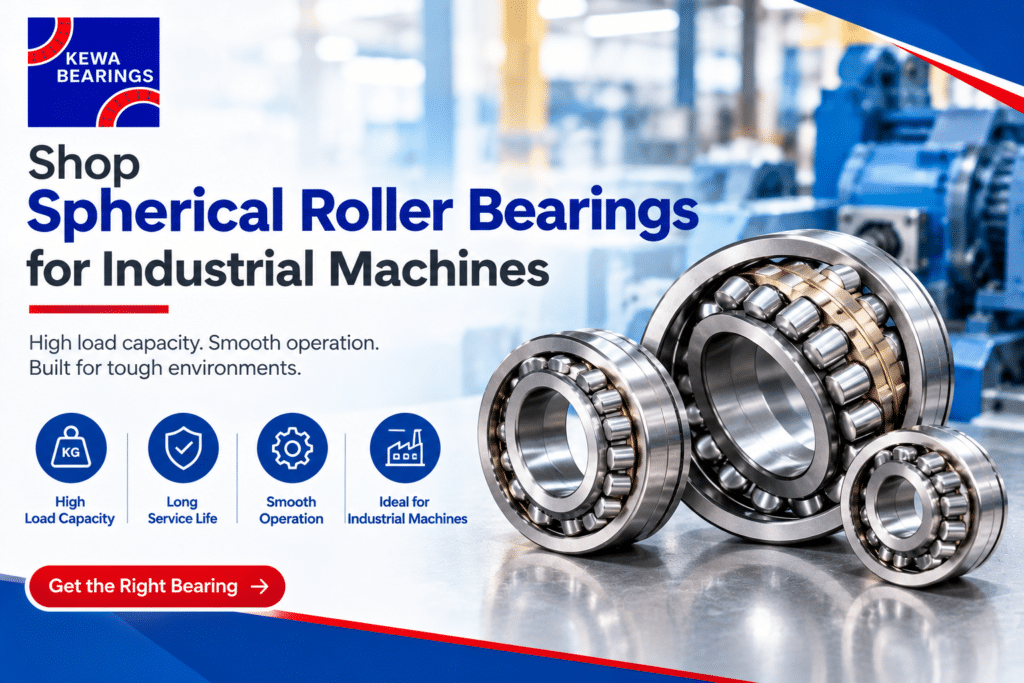
Industrial machines depend on high-quality components to deliver consistent performance, handle heavy loads, and operate efficiently. Bearings are essential parts of these machines because they support rotating shafts, reduce friction, and help maintain smooth movement. Among the different types available, spherical roller bearings are widely preferred for applications involving heavy loads and shaft misalignment.
From manufacturing plants and cement factories to mining equipment and conveyor systems, these bearings support machinery operating under challenging conditions. Selecting the right bearing can help reduce unexpected downtime, improve operational efficiency, and support long-term equipment reliability.
If you are planning to buy spherical roller bearing for industrial machinery, understanding its features, applications, and selection criteria is important. Kewa Bearings offers bearing solutions for various industrial requirements, helping businesses identify suitable products for their equipment.
What Are Spherical Roller Bearings?
Spherical roller bearings feature barrel-shaped rollers that help accommodate angular misalignment between the shaft and housing. If you plan to buy spherical roller bearing for industrial machinery, consider its load capacity, operating speed, lubrication, and working conditions.
These bearings are ideal for demanding applications because they handle heavy radial loads and, depending on their design, axial loads in both directions. Their strong design fits well in mining, cement plants, factories, and conveyor setups.
If you install them correctly and keep up lubrication, parts last longer. This can also cut down on surprise stops and help the equipment run more smoothly.
Key Benefits of Spherical Roller Bearings
1. High Load-Carrying Capacity
Industrial machinery often operates under considerable pressure and continuous workloads. Spherical roller bearings are designed to handle heavy radial loads and can also support axial loads within their specified operating limits.
Their sturdy build works well in gear used for mining, construction, moving materials, and factory work. Picking the right bearing load rating supports steady operation and lowers the chance of early wear or breakdown.
2. Ability to Accommodate Misalignment
Shaft misalignment may happen for a few reasons. It can come from how the parts were installed. It can also come from shaft bending during use. Operating conditions can add to the issue as well.
If a bearing is not built to handle the misalignment you expect, the loads can become too high. That can lead to stress in the bearing. Over time, this often shows up as early wear.
3. Durable Industrial Performance
Machines and gears need parts that can withstand harsh conditions. Spherical roller bearings show up often in tough work because the shape helps with heavy loads. They can also run for long periods, as long as they are chosen the right way.
To keep bearings working well, installation matters. Lubrication also matters. After that, the process should be repeated on a regular schedule. This helps the bearing stay in good shape for a practical service life.
4. Support for Efficient Operations
A sudden machine breakdown can stop production and raise repair costs. Picking the correct bearing can cut down on issues that happen when parts do not fit the job.
When you buy spherical roller bearing, evaluate your equipment’s technical requirements instead of selecting a product based only on price or appearance. The right choice can support smoother operations and more effective maintenance planning.
Industrial Applications of Spherical Roller Bearings
Mining and Mineral Processing
Mining equipment often operates under heavy loads, vibration, and dusty conditions. In some crushers, vibrating screens, and conveyor systems, spherical roller bearings are used. This happens when the bearing specs fit the needs of the job.
These bearings can support demanding applications where reliable load handling and appropriate misalignment tolerance are important.
Cement and Construction Industries
Cement plants use heavy machinery for crushing, grinding, processing, and transporting materials. Spherical roller bearings may be used in suitable conveyor systems, crushers, and other industrial equipment.
In these environments, selecting suitable lubrication and protection against dust and contamination is particularly important.
Steel and Metal Processing
Steel plants operate machinery that may experience substantial loads, vibration, and elevated temperatures. Spherical roller bearings are used in selected rolling mill support systems and material-handling applications.
The bearing’s load capacity, clearance, lubrication, and temperature suitability should be evaluated carefully before installation.
Paper and Pulp Manufacturing
Paper manufacturing requires consistent movement through rollers and rotating equipment. Suitable spherical roller bearings can support these applications by handling operational loads and accommodating expected angular misalignment.
Proper maintenance helps identify lubrication issues and unusual operating conditions before they cause significant equipment problems.
Conveyor and Material-Handling Systems
Conveyor systems move raw materials and final products through production areas. They also handle other industrial items. Along the way, rotating shafts and moving parts create loads. The bearings have to handle those forces.
For conveyor pulleys, spherical roller bearings may work well. This depends on the bearing size. It also depends on the load ratings. Speed limits matter too, since the equipment must stay within them.
How to Choose the Right Spherical Roller Bearing
Selecting an appropriate bearing is essential for dependable industrial performance. Before you buy spherical roller bearing, consider the following factors.
Check Load Requirements
Determine the radial and axial loads the bearing needs to support. Some machines operate under steady loads, while others experience shocks, vibrations, or frequent load changes.
Go through the equipment maker’s guidance and pick a bearing that matches the required load ratings. Choosing the wrong bearing can lead to early wear and surprise maintenance work.
Verify Bearing Dimensions
Bearing dimensions must match the shaft and housing arrangement. Important measurements include the bore diameter, outside diameter, and bearing width.
Check the complete bearing designation because similar-looking products may differ in internal clearance, cage design, load capacity, or other technical characteristics.
Consider Operating Speed
Different bearings have different operating-speed limits. These limits depend on the bearing design, load, lubrication method, and working conditions.
A bearing designed for a slow-moving conveyor may not be suitable for high-speed machinery. Always compare the required operating speed with the manufacturer’s specifications.
Evaluate Lubrication Requirements
Lubrication cuts down friction and helps limit wear where the rolling parts touch the raceways. What you use can change. Some setups work well with grease. Other setups need oil. Bearing types and applications vary depending on the application.
The lubricant type, quantity, supply method, and relubrication interval should follow the manufacturer’s recommendations. Both insufficient lubrication and excessive lubricant can create operating problems.
Assess Environmental Conditions
Factories and other industrial settings can put bearings near dust, water, chemicals, and higher heat. Conditions like these can hinder the bearing’s performance and shorten its life.
First, look closely at what the equipment is exposed to. Then pick a bearing setup that fits, along with seals and the right grease or oil plan. Keep checking the system on a regular schedule. That way you can catch dirt buildup and other early signs of trouble.
Why Choose Kewa Bearings for Industrial Bearing Requirements?
Finding the right bearing supplier is an important part of industrial procurement. Companies must choose the right items for their machines. They also need to think about how those machines run day to day.
Kewa Bearings focuses on bearing solutions for different industrial applications. Whether you are replacing an existing component or sourcing bearings for new equipment, understanding your requirements can make the purchasing process easier.
Before placing an order, keep the existing bearing number, dimensions, equipment details, and operating conditions ready. Sharing accurate information can help with product identification and reduce the chances of selecting an incompatible bearing.
When you buy spherical roller bearing from Kewa Bearings, focus on matching the product to your application rather than choosing solely on the basis of initial cost. The correct bearing, combined with proper installation and maintenance, can support equipment reliability and help manage operating expenses.
For businesses handling multiple machines, maintaining clear bearing records can also simplify future replacement and maintenance planning.
Common Mistakes to Avoid When Buying Spherical Roller Bearings
Ignoring Technical Specifications
Selecting a bearing based only on its appearance or approximate size can lead to compatibility problems. Always verify the complete designation, dimensions, and load requirements.
Overlooking Lubrication
Poor lubrication can increase friction, temperature, and wear. Follow the manufacturer’s guidance for lubricant selection and maintenance intervals.
Choosing the Wrong Load Capacity
A bearing has to match the real loads and the way the machine runs. Check the radial loads first, then look at the axial loads too. Only after that, pick the bearing.
Improper Installation
Incorrect mounting techniques, unsuitable tools, and improper fits can damage bearing components. Follow the recommended installation procedure and use appropriate tools.
Neglecting Regular Inspection
Unusual noise, vibration, and temperature changes can indicate developing problems. Planned inspections help identify these signs and support timely maintenance.
Avoiding these mistakes can help improve bearing performance, reduce avoidable replacements, and support more reliable machinery operation.
Conclusion
Spherical roller bearings are essential for industrial machines that handle heavy loads and require reliable performance. They are widely used in mining, cement, steel, and manufacturing industries.
Before you buy spherical roller bearing, check its dimensions, load capacity, speed, and lubrication requirements. Kewa Bearings offers bearing solutions to help meet your industrial needs and support efficient machine operation.
Frequently Asked Questions (FAQs)
1. What is a spherical roller bearing used for?
It supports rotating shafts in industrial machinery and handles heavy radial loads while accommodating angular misalignment.
2. Can spherical roller bearings handle heavy loads?
Yes. They handle heavy radial loads and can support axial loads within their specified operating limits.
3. Which industries use spherical roller bearings?
Mining, cement, steel, paper manufacturing, and material-handling industries commonly use them.
4. Are spherical roller bearings self-aligning?
Yes. Their design accommodates a certain degree of angular misalignment between the shaft and housing.
5. How do I select the correct bearing size?
The diameter of the shaft, the dimensions of the housing, the bearing designation, as well as the equipment specifications.
6. Do spherical roller bearings require lubrication?
Yes. Suitable grease or oil lubrication helps reduce friction and wear.
7. What causes bearing failure?
Common causes include poor lubrication, contamination, incorrect installation, excessive loads, and unsuitable operating conditions.
8. Can these bearings be used in conveyor systems?
Yes. They are suitable for conveyor applications when their specifications match the equipment requirements.
9. Where can I purchase spherical roller bearings?
Contact Kewa Bearings with your bearing number and application details to identify a suitable product.
10. How can I extend bearing service life?
Choose the correct bearing, install it properly, maintain suitable lubrication, and inspect it regularly.