
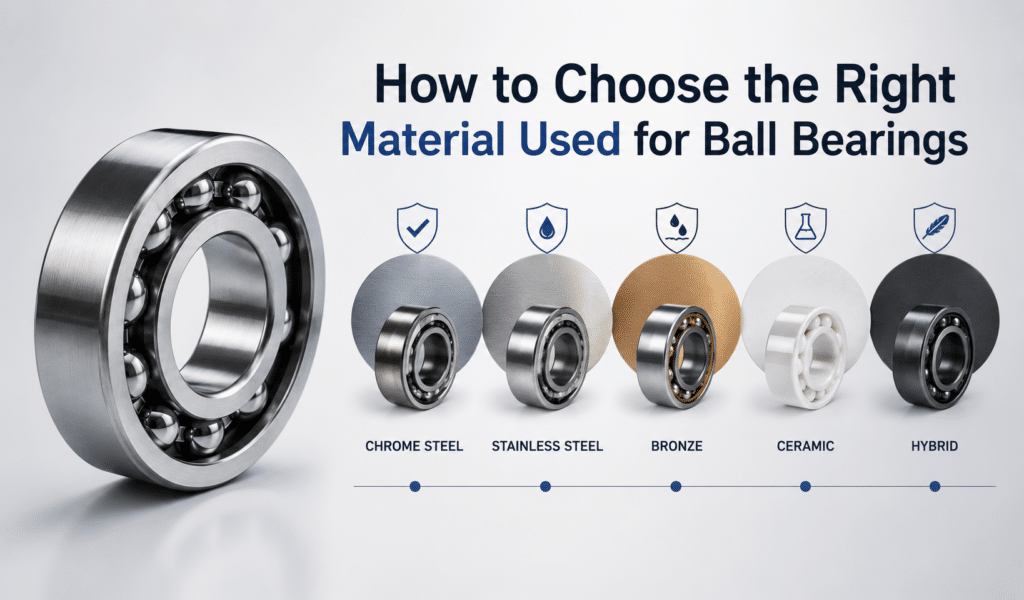
Picking the right material used for ball bearing is, in practice, kinda a big deal because it tends to affect performance, long term durability, how fast things can run, and even how much maintenance shows up. Ball bearings get used pretty often in automotive, machinery, electric motors, pumps, and various industrial equipment setups. If someone selects the wrong material, the bearings can age fast, or simply fail when the pressure gets high, or when things run longer than planned.
For that reason, each application really calls for a slightly different bearing material, depending on things like the load capacity, the temperature level, how much moisture is around, and the actual operating conditions. When businesses and machine operators get a clear grip on those factors, it’s easier to choose the more suitable option, rather than gambling with what will work.
Why Bearing Material Matters
The material used for ball bearing decides how good it is at dealing with friction heat, corrosion, and those heavy loads. When the bearing material is high quality, the whole machine tends to run with better efficiency, and you get less unexpected downtime.
For instance, bearings in water pumps usually need strong corrosion resistance, so they don’t degrade too fast from moisture. Meanwhile, bearings in heavy machinery often demand high strength, plus real load carrying capacity. Picking the right one like that can also extend the full life of the equipment, sometimes a lot.
Common Materials Used for Ball Bearings
Chrome Steel Bearings
Chrome steel is one of the most commonly used materials in ball bearings, it is kind of widely applied, because it brings great hardness and long lasting durability, plus solid wear resistance. You can use these bearings in high speed situations and in heavy load duties too, where the conditions are tougher, and they keep working.
Chrome steel bearings are commonly used in:
- Electric motors
- Industrial machinery
- Automotive systems
- Gearboxes
Because of their strength and affordability, chrome steel bearings are often preferred for general industrial use.
Stainless Steel Bearings
Stainless steel bearings are pretty well known for their corrosion resistance, in a sort of dependable way. They also perform well when they are in environments with moisture chemicals or even just plain humidity.
These bearings are ideal for:
- Food processing equipment
- Marine applications
- Medical machinery
- Water pumps
Even if stainless steel bearings don’t always stand up to extremely heavy loads the way chrome steel does, they tend to last longer in damp or corrosive environments.
Ceramic Bearings
Ceramic bearings are pretty light weight , and they can work at extremely high speeds too. They usually create less friction and less heat then steel bearings do, so overall things stay smoother, and cooler.
Industries often use ceramic bearings in:
- High-speed machinery
- Aerospace equipment
- Precision instruments
- Racing applications
However, ceramic bearings are usually more expensive than steel bearings, so they are mainly chosen for specialized applications.
Hybrid Bearings
Hybrid bearings combine steel rings with ceramic balls. This combination offers both durability and high-speed performance.
The material used for ball bearing in hybrid designs helps reduce electrical conductivity and heat generation. These bearings are commonly used in electric motors and advanced industrial systems.
Factors to Consider Before Choosing Bearing Material
Load Capacity
Heavy duty machines need materials that are, more resistant for real—chrome steel is sort of a common pick. For lighter use cases though, you can sometimes get away with stainless steel bearings, or even ceramic ones, and they tend to run efficiently.
Operating Environment
If the bearing keeps working in wet dusty, or chemical loaded surroundings, corrosion resistance material sort of becomes important. Often stainless steel bearings are the better choice in those cases, since they handle the whole thing more reliably.
Speed Requirements
For fast, high-speed kinds of uses, ceramic or mixed type bearings are usually picked, because they create less friction, and also less heat. It’s kinda like they run smoother overall, not that it’s hard to see why.
Temperature Conditions
Extreme temperatures can affect bearing performance. Certain materials are designed to handle high heat without losing strength.
Maintenance Needs
Some materials need a bit less lubrication and day to day maintenance than others, and in a way that can really matter. When you choose the correct bearing material, you can cut down on those upkeep expenses later on, not just right away.
Conclusion
Choosing the right material used for ball bearing really depends on the application and the day to day working conditions. Chrome steel is often best for heavy duty work, stainless steel fits wet environments well, while ceramic or hybrid bearings tend to bring smoother high speed performance . Kewa Bearings provides dependable options for a range of industrial requirements, so you can match the design with what you need.
FAQs
Which bearing material is best for rust prevention?
Stainless steel bearings are generally considered best for preventing rust and corrosion in humid or wet environments.
Are ceramic ball bearings noisy?
No, ceramic bearings usually operate more smoothly and quietly compared to traditional steel bearings.
Can bearing material affect energy efficiency?
Yes, low-friction materials like ceramic can improve machine efficiency and reduce energy consumption.
Which bearings are commonly used in electric motors?
Hybrid and chrome steel bearings are widely used in electric motors because of their strength and performance.
Do all ball bearings require lubrication?
Most ball bearings need lubrication, but some advanced materials reduce lubrication requirements and maintenance frequency.