Modern machines are expected to work faster, longer, and under demanding operating conditions. Whether used in manufacturing plants, heavy machinery, automotive equipment, or industrial systems, machines need reliable components to maintain smooth movement and reduce unnecessary wear. Bearings play an important role in achieving this performance.
Among the different bearing designs available for industrial applications, double row rollers are known for their ability to support substantial radial loads while maintaining dependable operation. Their construction allows them to distribute loads across multiple rolling elements, making them useful in applications where strength, stability, and durability are important.
Understanding how these rollers work and how they affect machine performance can help industries choose suitable bearing solutions for their equipment.
What Are Double Row Rollers?
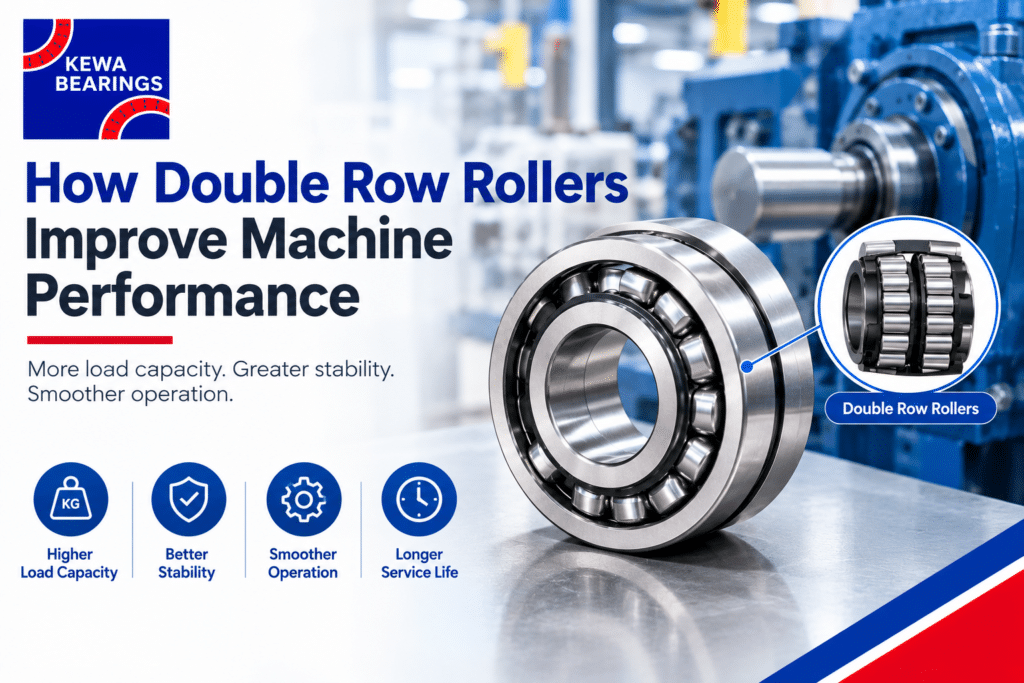
A double-row roller bearing generally contains two rows of rollers arranged within the bearing assembly. Instead of relying on a single row of rolling elements, the two rows can provide greater load-carrying capability and improved support for certain applications.
The rollers create controlled contact between the rotating and stationary components. This reduces direct metal-to-metal sliding and allows the machine shaft or other rotating part to move more efficiently.
The exact performance of a bearing depends on its design, dimensions, lubrication, load conditions, alignment, speed, and operating environment. Therefore, selecting the correct bearing for a specific machine is essential.
How Do Double Row Rollers Improve Machine Performance?
A properly selected bearing can influence several aspects of machine operation. Here are some of the key ways double row rollers can contribute to better performance.
1. Better Load Distribution
Industrial machines often operate under heavy loads. If the load is concentrated on a small area, individual components may experience increased stress and wear.
A two-row roller arrangement provides multiple rolling elements to carry the applied load. This can help distribute forces within the bearing and support demanding operating conditions.
Better load distribution can be particularly useful in machines where shafts or rotating components experience substantial radial forces. When the bearing is correctly selected and installed, the load can be handled more effectively, helping support consistent machine operation.
2. Higher Load-Carrying Capability
One important advantage of roller bearing designs is their ability to handle higher radial loads compared with many conventional ball bearing arrangements of similar dimensions.
With two rows of rollers, the bearing can provide increased load-supporting capacity. This makes such designs suitable for equipment that operates under heavy mechanical loads.
Industries such as steel processing, construction equipment, material handling, gearboxes, and manufacturing machinery may encounter operating conditions where strong radial load support is necessary.
However, the bearing’s actual load capacity depends on its specific design and manufacturer-rated specifications.
3. Improved Machine Stability
Machine stability is important for maintaining consistent performance. Excessive movement or unwanted shaft displacement can affect connected components and increase wear.
The arrangement of two rows of rollers can provide strong radial support to the rotating shaft. This can help maintain the desired position of the shaft during operation when the bearing is appropriately selected for the application.
Improved support can also contribute to smoother interaction between connected machine components, reducing unnecessary mechanical disturbances.
4. Reduced Wear on Machine Components
Friction and excessive contact can gradually damage machine components. When a bearing operates correctly, its rolling elements allow relative movement while limiting sliding friction.
The use of double row rollers can support efficient rolling contact and distribute operating forces across multiple rollers. This may help reduce localized stress and contribute to longer service life for the bearing and associated components.
Of course, bearing life is influenced by several factors, including lubrication, contamination, installation accuracy, load, operating speed, temperature, and maintenance practices.
5. Reliable Performance Under Heavy-Duty Conditions
Many industrial machines operate continuously or under demanding conditions. Downtime caused by bearing failure can interrupt production and increase maintenance costs.
Roller bearings with two rows can be suitable for applications where high radial loads and reliable support are required. Their robust construction makes them useful for a wide range of industrial machinery.
For businesses, selecting a bearing that matches the machine’s actual operating conditions is more important than simply choosing a bearing based on size or load capacity.
6. Support for Continuous Operation
Production environments often require machines to operate for extended periods. A bearing that is correctly specified, lubricated, installed, and maintained can support reliable operation over its expected service life.
The load-sharing characteristics of two-row roller designs can make them suitable for equipment exposed to continuous radial loading.
Regular inspection remains important. Checking for abnormal noise, vibration, temperature increases, lubrication problems, or signs of damage can help identify potential bearing issues before they develop into major failures.
7. Better Handling of Radial Loads
Radial loads act perpendicular to the shaft. Many industrial machines generate significant radial forces during normal operation.
Because roller bearings use rollers rather than point-contact balls, they can provide a larger contact area for supporting radial loads. Two rows of rollers can further increase the number of rolling elements available to share the load.
This makes them a practical option for machinery where radial load support is a major requirement.
Where Are Double Row Rollers Commonly Used?
Different types of roller bearings are used across numerous industries. Depending on their construction and specifications, double-row designs may be found in applications such as:
- Industrial gearboxes
- Heavy machinery
- Conveyor systems
- Steel and metal processing equipment
- Mining machinery
- Construction equipment
- Material handling systems
- Automotive and transmission applications
- Electric motors and industrial drives
- Manufacturing machinery
The correct bearing type varies according to the machine’s load, speed, shaft dimensions, temperature, alignment, lubrication, and environmental conditions.
Factors to Consider When Choosing a Bearing
Choosing the right bearing involves more than selecting a component that fits physically. Before purchasing, industries should evaluate several technical factors.
Load Requirements
Determine the expected radial and axial loads. The bearing should have an appropriate load rating for the application.
Operating Speed
Different bearing designs have different speed capabilities. The operating speed should remain within the manufacturer’s recommended range.
Lubrication
Proper lubrication reduces friction and helps control heat and wear. The correct lubricant and lubrication interval depend on the application.
Temperature
High or fluctuating temperatures can affect lubricant performance and bearing materials. The operating temperature should be considered during selection.
Installation
Even a high-quality bearing can fail prematurely if it is installed incorrectly. Proper tools, mounting procedures, alignment, and handling are essential.
Operating Environment
Dust, moisture, chemicals, dirt, and other contaminants can affect bearing performance. Sealing and protection should match the working environment.
Why Quality Matters
Bearing quality can have a direct effect on machine reliability. Poor-quality or incorrectly specified bearings may lead to excessive vibration, overheating, noise, premature wear, and unexpected downtime.
For industrial users, working with an experienced bearing manufacturer or supplier can help identify the appropriate solution for specific machinery.
Kewa Bearings focuses on providing bearing solutions designed for demanding industrial applications. The right bearing, combined with correct installation and maintenance, can help machinery operate efficiently and reliably.
Maintenance Tips for Longer Bearing Life
Even durable bearings require proper maintenance. Businesses can improve bearing performance by following a few basic practices:
- Use the recommended lubricant and lubrication quantity.
- Keep bearings protected from dust and moisture.
- Follow correct installation procedures.
- Avoid excessive force during mounting.
- Monitor unusual vibration, noise, or temperature.
- Inspect bearings regularly in critical machinery.
- Replace damaged or excessively worn components promptly.
- Follow the manufacturer’s operating recommendations.
Preventive maintenance can help identify developing problems before they result in costly machine downtime.
Final Thoughts
Machine performance depends on the reliability of every major component. Bearings may be small compared with the machines they support, but their role in controlling friction, carrying loads, and supporting rotating parts is significant.
Double row rollers can provide increased radial load support, effective load distribution, and strong shaft support in suitable applications. Their performance, however, depends on selecting the correct bearing design and using it within its recommended operating conditions.
For industries looking for dependable bearing solutions, Kewa Bearings can provide products suited to a variety of industrial requirements. By combining appropriate bearing selection with proper lubrication, installation, and preventive maintenance, businesses can support smoother machine operation and reduce the risk of unexpected bearing-related downtime.
FAQs
1. What are double row rollers?
They are bearing designs with two rows of rollers that help support heavy radial loads.
2. What is the main benefit of double row rollers?
They provide better load distribution and strong radial load-carrying capacity.
3. Where are double row rollers used?
They are commonly used in industrial machinery, gearboxes, conveyors, and heavy equipment.
4. Do double row rollers reduce friction?
Yes, rolling elements help reduce friction between moving machine components.
5. Can double row rollers improve machine stability?
Yes, they can provide strong shaft support and improve operational stability when correctly
selected.
6. Are double row rollers suitable for heavy loads?
Yes, many designs are specifically made to handle demanding radial loads.
7. How does lubrication affect roller bearings?
Proper lubrication reduces friction, heat, and wear, helping extend bearing life.
8. How often should roller bearings be inspected?
Inspection frequency depends on the machine and operating conditions, but regular checks are recommended.
9. Can double row rollers handle continuous operation?
Yes, suitable designs can support continuous operation when properly installed, lubricated, and maintained.
10. Why choose Kewa Bearings?
Kewa Bearings offers bearing solutions designed to support various industrial machinery and performance requirements.