
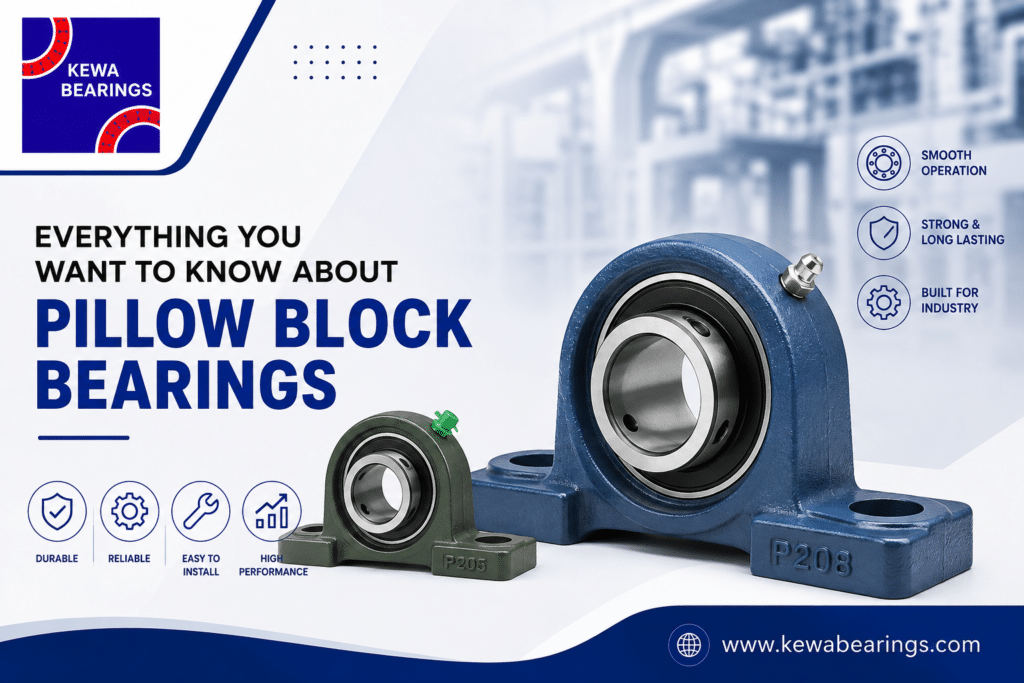
Pillow block bearings are essential components that help industrial machines run smoothly by reducing friction and supporting rotating shafts. Used in industries ranging from manufacturing to agriculture, they improve efficiency and extend equipment life. With various pillow block bearing types available, choosing the right one depends on your machine’s load, operating conditions, and application. In this guide, we’ll cover everything you need to know about pillow block bearings, including their types, uses, benefits, and selection tips.
What Is a Pillow Block Bearing?
A pillow block bearing, also called a plummer block in some industries, is a mounted bearing
unit that supports a rotating shaft. It consists of two main parts: the bearing insert and the housing. The housing is bolted onto a flat surface, while the bearing inside allows the shaft to rotate smoothly.
Think of it as a strong support system for a rotating shaft. Instead of installing separate bearing components, you get a complete unit that’s ready to mount, making installation much quicker and easier.
This simple design is one of the biggest reasons pillow block bearings are used in almost every manufacturing sector.
Why Are Pillow Block Bearings So Popular?
One reason these bearings are widely preferred is their versatility. They work well in both light-duty and heavy-duty applications and require relatively little maintenance when properly lubricated.
Another advantage is easy replacement. If a bearing wears out, technicians can often replace the insert without making major changes to the machine. This saves both time and maintenance costs.
Businesses also appreciate their ability to reduce vibration, maintain proper shaft alignment, and improve the overall efficiency of equipment.
How Does a Pillow Block Bearing Work?
Although the design looks simple, it performs an important job.
As the shaft rotates, the rolling elements inside the bearing reduce friction between moving parts. The housing keeps everything securely aligned while protecting the bearing from external forces. Most modern units also include seals that prevent dust, dirt, and moisture from entering the bearing.
The result is smoother operation, lower wear, and longer machine life.
Different Pillow Block Bearing Types
Understanding the various pillow block bearing types makes it much easier to choose the right product for your machinery.
Standard Pillow Block Bearings
These are the most commonly used mounted bearings. They’re suitable for everyday industrial applications where machines operate under normal conditions.
You’ll often find them in conveyors, textile machines, packaging equipment, woodworking machines, and agricultural systems.
Heavy-Duty Pillow Block Bearings
Some industries simply demand more from their equipment. Mining plants, cement factories, steel industries, and crushers expose bearings to extremely high loads.
Heavy-duty pillow block bearings are built with stronger housings and larger bearing inserts to handle these demanding environments without compromising performance.
Stainless Steel Pillow Block Bearings
Not every workplace is dusty or dry. Food processing plants, dairy industries, beverage factories, and pharmaceutical companies require equipment that can resist corrosion.
That’s where stainless steel pillow block bearings shine. They offer excellent resistance against rust, moisture, and chemicals while maintaining hygiene standards.
Thermoplastic Pillow Block Bearings
For applications involving frequent washdowns or chemical exposure, thermoplastic housings are an excellent option.
They’re lightweight, corrosion-resistant, and commonly used in food manufacturing, seafood processing, and chemical plants.
Split Pillow Block Bearings
Large industrial machines often make maintenance difficult because removing the shaft takes considerable time.
Split pillow block bearings solve this problem by allowing maintenance teams to inspect or replace the bearing without removing the entire shaft assembly. This significantly reduces downtime.
Bearing Insert Options
Not all pillow block bearings use the same insert. The bearing itself also varies depending on the application.
Ball Bearing Inserts
These are the most popular choice for medium-speed applications. They provide smooth rotation, low friction, and quiet operation.
Spherical Roller Bearing Inserts
These inserts are designed for heavier loads and can accommodate slight shaft misalignment. They’re commonly used in mining, construction, and heavy manufacturing industries.
Housing Materials
One interesting fact about pillow block bearing types is that the housing material often matters just as much as the bearing itself.
Cast Iron remains the most popular option because it’s durable, affordable, and suitable for most industrial environments.
Ductile Iron offers greater strength and impact resistance, making it ideal for heavy-duty machinery.
Stainless Steel provides excellent corrosion resistance and is widely used in hygienic industries.
Thermoplastic housings are lightweight and highly resistant to chemicals, making them suitable for specialized environments.
Common Applications
You may not notice pillow block bearings in everyday life, but they’re working behind the scenes almost everywhere.
Manufacturing plants use them in conveyor systems, automated production lines, and assembly machines.
Agricultural equipment such as harvesters, seed drills, irrigation systems, and grain conveyors depend on mounted bearings for reliable performance.
The mining industry uses heavy-duty units in crushers, vibrating screens, and material handling systems.
Food processing companies rely on stainless steel versions to meet hygiene requirements.
Textile industries install them in spinning, weaving, and dyeing machines, while packaging companies use them in labeling, sealing, and filling equipment.
Simply put, wherever there’s a rotating shaft, there’s a good chance you’ll find one of the many pillow block bearing types supporting it.
How to Choose the Right Pillow Block Bearing
Buying the right bearing isn’t just about selecting the correct size.
First, consider the load your machine carries. Heavy machinery requires bearings designed for higher load capacities.
Next, check the shaft diameter. The bearing bore should perfectly match the shaft size.
Operating speed is another important factor. Some bearings are designed for high-speed applications, while others perform better under slower, heavier loads.
Environmental conditions should never be ignored. Dust, moisture, chemicals, extreme temperatures, and frequent washdowns all influence the type of bearing you’ll need.
Finally, consider maintenance requirements. Greaseable bearings are ideal for long-term industrial use, while sealed units require less frequent servicing.
Installation Tips
Even the best bearing won’t perform well if it’s installed incorrectly.
Always clean the shaft before mounting the bearing. Dirt or rust can affect alignment and reduce bearing life.
Make sure the housing is mounted on a flat surface to avoid unnecessary stress.
Tighten bolts evenly and avoid overtightening the locking mechanism.
Once installed, rotate the shaft by hand to ensure everything moves smoothly before starting the machine.
Taking a few extra minutes during installation can prevent expensive repairs later.
Maintenance Best Practices
Regular maintenance goes a long way in extending bearing life.
Inspect the bearing for unusual sounds, vibration, or heat. These are often the first warning signs that something isn’t right.
Lubricate according to the manufacturer’s recommendations. Too little grease increases friction, while too much can generate excess heat.
Keep the surrounding area clean and replace damaged seals immediately to prevent contamination.
Routine inspections may seem simple, but they help avoid unexpected machine breakdowns and costly production delays.
Signs Your Pillow Block Bearing Needs Replacement
Every bearing eventually reaches the end of its service life.
If you notice loud noise, excessive vibration, rising operating temperatures, grease leakage, shaft wobbling, or visible damage to the housing, it’s time to inspect the bearing.
Ignoring these warning signs can lead to bigger mechanical failures and higher repair costs.
Why Choose Kewa Bearings?
At Kewa Bearings, we understand that every industry has different operating conditions. That’s why we offer a comprehensive range of high-quality mounted bearing solutions designed for performance and durability.
Our collection includes multiple pillow block bearing types suitable for manufacturing, agriculture, mining, food processing, packaging, and many other industries.
Every bearing is manufactured with precision, tested for quality, and built to deliver reliable performance even under demanding working conditions. Whether you need a standard mounted unit or a heavy-duty industrial solution, Kewa Bearings provides dependable products backed by expert support.
Conclusion
Pillow block bearings may be small, but they play a vital role in keeping machinery running smoothly and efficiently. Understanding the different pillow block bearing types helps you choose the right bearing for better performance, longer service life, and lower maintenance costs. At Kewa Bearings, we offer reliable, high-quality bearing solutions designed to meet the needs of a wide range of industrial applications.
Frequently Asked Questions
1. What is a pillow block bearing?
A pillow block bearing is a mounted bearing unit that supports rotating shafts while reducing friction and ensuring smooth operation.
2. What are the main pillow block bearing types?
The most common types include standard, heavy-duty, stainless steel, thermoplastic, and split pillow block bearings.
3. Where are pillow block bearings commonly used?
They’re used in manufacturing, agriculture, mining, food processing, packaging, conveyors, and textile industries.
4. Which housing material is best?
It depends on the application. Cast iron suits general use, while stainless steel and thermoplastic are ideal for corrosive or hygienic environments.
5. How often should pillow block bearings be lubricated?
Lubrication intervals vary based on operating conditions, speed, and load. Always follow the manufacturer’s recommendations.
6. Can pillow block bearings handle heavy loads?
Yes. Heavy-duty models are specifically designed for demanding industrial applications.
7. What causes pillow block bearing failure?
Poor lubrication, contamination, shaft misalignment, excessive loads, and improper installation are common causes.
8. Are stainless steel pillow block bearings rust-resistant?
Yes. They provide excellent corrosion resistance and are ideal for food, pharmaceutical, and marine industries.
9. How do I choose the right pillow block bearing?
Consider shaft size, load capacity, operating speed, environmental conditions, and housing material before making a decision.
10. Why should I choose Kewa Bearings?
Kewa Bearings offers durable, precision-engineered bearing solutions with consistent quality, reliable performance, and expert technical support.