
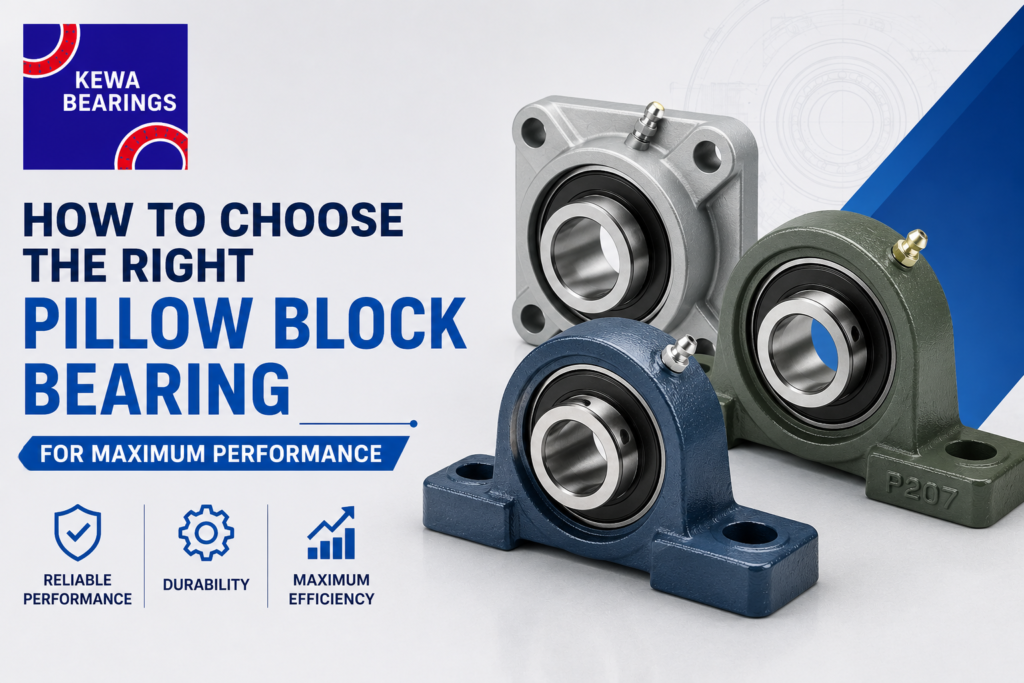
Picking the right bearing is essential for smooth machine work, lower friction, and an extended service life of the equipment. Pillow block bearings are widely used because they bring easy assembly and dependable performance, you know. If you’re looking for pillow block bearings near me, it helps to think about shaft size, the applied load, speed, the working environment, and the specific needs of the application, before you decide. This way the bearing choice is more accurate, and you get maximum performance without unexpected issues.
What Is a Pillow Block Bearing?
A pillow block bearing is a mounted bearing unit, meant to back a rotating shaft, and yes it is basically about keeping that shaft doing its work without too much fuss. Usually it has a bearing element sitting inside a housing, after that the whole thing gets fixed, securely, onto a machine frame or another supporting surface. The outer housing gives the whole setup stability, while the inside part helps the shaft spin steadily, with lower friction.
Pillow block bearings show up often in conveyor systems,agricultural equipment, industrial machinery, manufacturing tools, material-handling setups and many more use cases. Because they are straightforward to install, and also relatively easy to swap out, they are a practical choice for fresh builds as well as routine maintenance.
Why Choosing the Right Pillow Block Bearing Matters
The correct pillow block bearing can have a direct impact on machine performance. A properly selected bearing helps support the required load, maintains shaft alignment, reduces vibration, and allows smooth rotation.
On the other hand, using the wrong bearing may result in overheating, excessive noise, vibration, premature wear, shaft damage, and unexpected equipment downtime. In demanding industrial applications, even a small bearing selection mistake can lead to higher maintenance costs and production losses.
This is why it is important to consider the following factors before purchasing a pillow block bearing.
Sure, here is a slightly more detailed version that remains concise and easy to read:
1. Check the Shaft Size
The shaft diameter is one of the most important factors when choosing a pillow block bearing and honestly it matters more than many people think. You need the bearing bore to match the shaft size correctly, so the fit stays true and the rotation stays smooth. If the size is off, you can get looseness, awkward alignment, and premature wear. Before you purchase anything, measure the shaft accurately, do not guess. If you are searching for pillow block bearings near me share the exact shaft diameter along with the application details with the supplier.
2. Understand the Load Requirements
Different machines handle different types of loads. Some applications mainly experience radial loads, while others may also involve axial loads. Choose a bearing with the right load-carrying capacity for your machine. For heavy-duty applications, a high-capacity bearing is essential to prevent excessive wear, deformation, and premature failure.
3. Consider Operating Speed
The operating speed of the shaft also affects bearing selection. Bearings designed for low-speed applications may not be suitable for high-speed machinery. High-speed operation can generate more friction and heat, so the bearing must be capable of operating smoothly without overheating. Always check the manufacturer’s recommended speed range.
4. Select the Right Housing Type
Pillow block bearings are available with different housing designs and materials. Select a housing that suits your machine’s mounting requirements and operating conditions. Cast iron is commonly used for general industrial applications because of its strength, while stainless steel or corrosion-resistant housings are better for wet or corrosive environments.
5. Consider the Operating Environment
The working environment can really affect bearing life and performance, a lot more than people think in practice. Dust, water, chemicals, humidity, and high temperatures may damage the bearing or reduce its efficiency. Consider these conditions before selecting a bearing and choose suitable materials, seals, and protection for the application.
6. Choose the Correct Sealing Arrangement
Seals help protect the bearing from dust, dirt, water, and other contaminants while retaining lubricant inside. The right sealing arrangement depends on the operating environment. Applications exposed to heavy dust or moisture require effective sealing to prevent contamination and extend bearing service life.
7. Check the Alignment Requirements
Shaft misalignment can place additional stress on the bearing and lead to premature failure. Some pillow block bearing designs can accommodate limited misalignment, but proper installation and alignment are still important. A bearing should not be used as a replacement for correct machine alignment.
8. Consider Lubrication Requirements
Proper lubrication is essential for reducing friction, controlling heat, and preventing excessive wear. Some bearings are pre-lubricated, while others require regular relubrication. Follow the manufacturer’s recommendations based on the bearing type, operating speed, load, and working environment.
9. Focus on Quality and Manufacturing Standards
Bearing quality directly affects performance, durability, and reliability. Low-quality bearings may require frequent replacement and increase maintenance costs. Choose a trusted manufacturer such as Kewa Bearings that focuses on quality materials, accurate manufacturing, and reliable performance for different industrial applications.
10. Consider Total Cost Instead of Only Purchase Price
The cheapest bearing may not always provide the best value. A high-quality bearing can offer a longer service life, lower maintenance requirements, better performance, and reduced downtime. Therefore, consider the total cost of ownership rather than focusing only on the initial purchase price.
Common Applications of Pillow Block Bearings
Pillow block bearings are used in many industries because of their versatile design. Some common applications include conveyor systems, agricultural machinery, food processing equipment, packaging machines, textile machinery, industrial fans, material-handling equipment, and manufacturing systems.
They are especially useful in applications where the bearing needs to be mounted securely on a supporting surface while allowing the shaft to rotate smoothly.
Common errors to avoid when choosing a Pillow Block Bearing
One of the most common mistakes is selecting a bearing based only on its size. Shaft diameter is important, but load, speed, environment, housing type, and lubrication requirements must also be considered.
Another mistake is ignoring the operating environment. A standard bearing may not perform well in areas exposed to water, dust, chemicals, or extreme temperatures.
Improper installation is another major cause of bearing failure. Even a high-quality bearing can fail prematurely if it is incorrectly mounted, misaligned, over-tightened, or inadequately lubricated.
How to Find the Right Pillow Block Bearings Near Me
When searching for pillow block bearings near me, it is important to look beyond availability and price. Choose a supplier that can provide the right bearing specifications and technical guidance for your application.
Before contacting a supplier, keep important details ready, including the shaft diameter, operating speed, expected load, machine type, operating environment, and mounting requirements. This information helps the supplier recommend the most suitable bearing.
Working with a reliable bearing manufacturer such as Kewa Bearings can also help you select products that meet your specific industrial requirements.
Conclusion
Choosing the right pillow block bearing improves machine performance, reliability, and service life. Consider factors like shaft size, load, speed, environment, alignment, lubrication, and product quality. If you are searching for pillow block bearings near me, choose a reliable supplier and the right bearing for your application. With proper installation and maintenance, pillow block bearings can deliver long-lasting and dependable performance.
Frequently Asked Questions
What is a pillow block bearing used for?
It supports rotating shafts, reduces friction, and ensures smooth machine operation.
What is the best way to choose a pillow block bearing?
Consider the shaft size, load, speed, environment, alignment, and lubrication requirements.
Are pillow block bearings suitable for heavy-duty applications?
Yes, suitable models can handle heavy loads and demanding industrial conditions.
Can pillow block bearings handle misalignment?
Some models can handle limited misalignment, but proper alignment is still important.
What causes pillow block bearing failure?
Poor lubrication, contamination, overloading, misalignment, overheating, and incorrect installation.
How often should pillow block bearings be lubricated?
Lubricate them according to the manufacturer’s recommended maintenance schedule.
Are pillow block bearings easy to install?
Yes, their mounted housing design makes installation relatively simple.
What materials are pillow block bearing housings made from?
Common materials include cast iron, pressed steel, and stainless steel.
Where can I find pillow block bearings near me?
You can contact reliable local suppliers or trusted manufacturers like Kewa Bearings.
Why is bearing quality important?
Quality bearings offer better durability, smoother operation, and longer service life.