
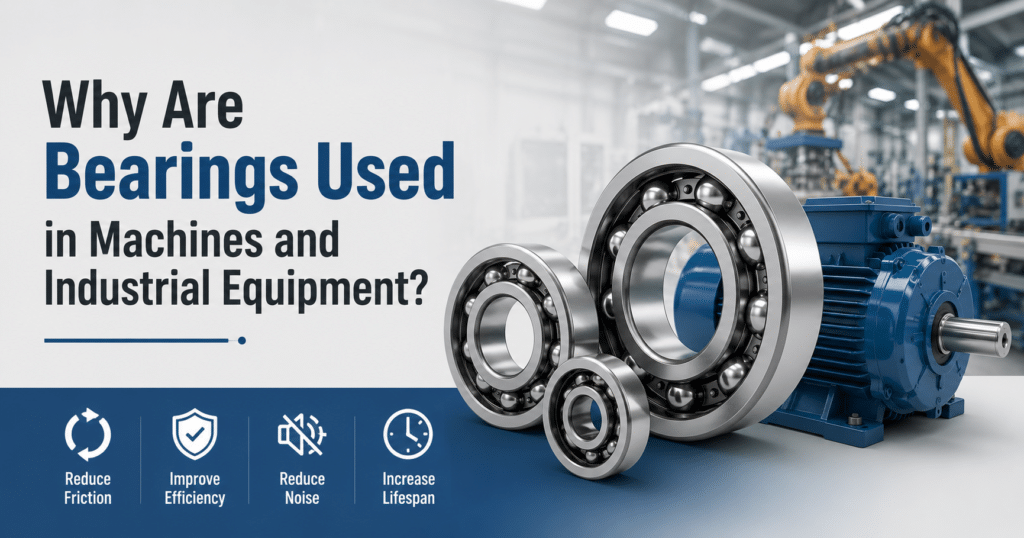
Machines are made to do work, kind of fast and steady, but almost every time parts move there is this constant sliding or turning between surfaces. That contact can bring friction, more heat ,and eventual wear. So you end up asking, why are bearings used in machines and industrial equipment? Mostly because bearings help the machine run better, with less resistance, and they also help the equipment last longer.
You can find bearings basically everywhere, from manufacturing sites where things spin all day, to vehicles where wheels, shafts, and steering parts are always in motion.
What Are Bearings?
Bearings are mechanical parts that hold moving components in place and help them move with less drag. Usually they sit between a rotating shaft and a fixed housing. Instead of having metal rub directly against metal , bearings create a controlled way for motion to happen, so the machine keeps working without that constant harsh contact.
Why Are Bearings Used in Machines?
The main answer to why are bearings used is pretty simple: they reduce friction between moving pieces. If bearings weren’t there, the parts would grind against each other ,and they would degrade quickly due to heat buildup and continuous contact.
Here are some key benefits you get from bearings:
Reduced Friction
Friction tends to slow motion down and makes machines use extra energy. With bearings, the movement stays smoother, and the machine doesn’t waste effort fighting resistance.
Improved Equipment Life
When wear and tear goes down, the life of the equipment goes up. That usually means fewer repairs, less downtime, and fewer replacement cycles for those mechanical pieces.
Better Load Support
Bearings are built to deal with different load styles. They can support radial load, axial load ,or combinations depending on the design. This load handling keeps operation stable and predictable.
Increased Efficiency
When friction is lower, the machine needs less force to do the same work. That can raise efficiency, boost productivity, and keep operations more consistent over time.
Reduced Noise and Vibration
Bearings help keep the motion steadier, so you get less unwanted vibration and noise. In industrial equipment, this matters a lot because extra vibration can lead to problems faster and make the whole system feel rough sooner
Applications of Bearings in Industrial Equipment
Honestly, understanding why bearings are used is kinda easier once you see where they actually show up. Bearings get used all over industrial equipment, and in places like electric motors, conveyor systems, pumps and compressors. Also agricultural machinery, industrial fans, automotive components, and manufacturing equipment, not to mention all the daily work they do in the background.
In these applications bearings help with smooth motion, and also keep things stable so you get steady performance. They’re basically the “silent support” that keeps systems from getting rough too fast.
Importance of Quality Bearings
The quality of a bearing is not just a small detail, it really affects machine efficiency, and also how long the machine stays reliable. Better bearings are made with strong materials, and they follow strict precision engineering, which matters more than people think.
That’s why choosing trusted manufacturers like Kewa Bearings is useful, because it can help industries get consistent performance with less unexpected stoppage. Regular lubrication and upkeep are also a big deal here. Without lubrication, even a solid bearing can wear out sooner, and then machine reliability takes a hit. So yeah, maintenance counts.
Choosing the Right Bearing
Not every machine wants the same bearing, so you have to match the type to the job. Things like load capacity operating speed , temperature, and the working environment should be thought through before you select anything. If you pick wrong, you can get extra vibration or shorter lifespan. And nobody wants that.
Common choices include ball bearings, roller bearings, thrust bearings, and pillow block bearings. Once you select the correct bearing type you’re more likely to reach stable operation, and longer service life too, generally.
Conclusion
If you’re wondering why bearings are used, the answer really is straightforward. Bearings help machines run smoothly, efficiently, and dependably. They reduce friction, carry loads, limit wear, and improve the overall lifespan of the equipment. Whether it’s industrial machinery, automotive systems, or manufacturing equipment bearings are key parts that help operations keep moving without too many interruptions.
Investing in quality bearings from Kewa Bearings can also improve machine performance and reduce maintenance costs, especially over time. So it’s not only about “having” a bearing, it’s about having the right one.
FAQs
Why do machines even use bearings , anyway?
Bearings show up to cut down friction , and to help parts slide or rotate in a smoother way, you know, between two or more sections.
So what’s the main job of a bearing?
Mostly it’s to take on loads while still letting motion happen in a controlled manner, not too wild.
Do bearings actually help machines last longer?
Yes, bearings reduce wear and tear and that usually pushes the usable lifespan of the equipment farther.
Where do we see bearings most often?
You’ll find them in motors, pumps, conveyors, vehicles, and in a bunch of industrial machinery too.
How can bearing life be extended?
With the right lubrication, proper upkeep , and correct installation. That combo is basically the common recipe for longer service.