
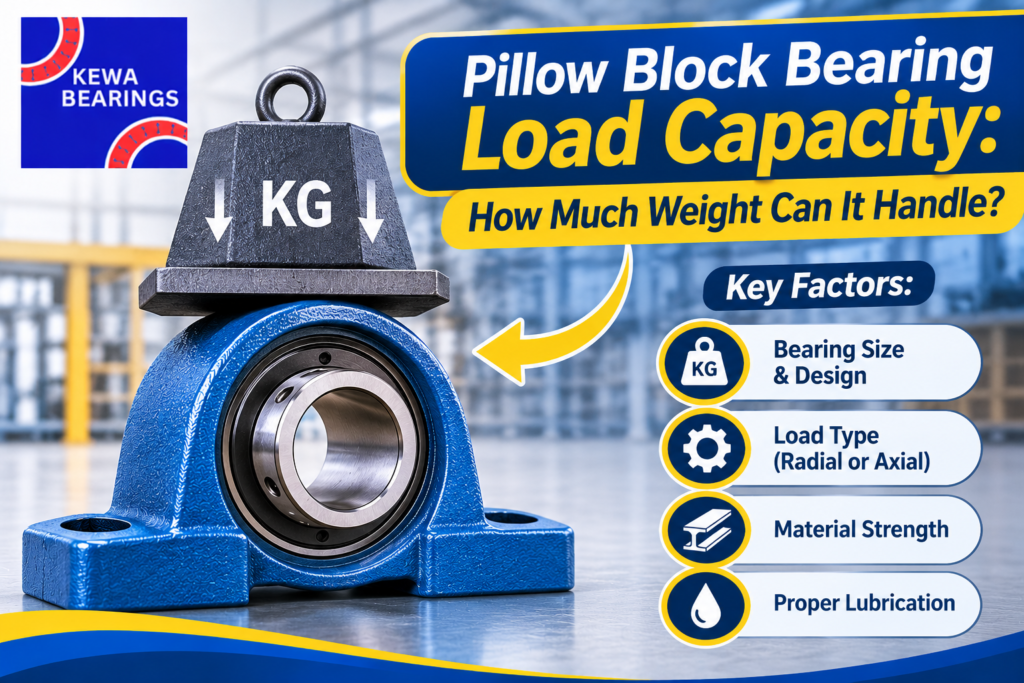
Pillow block bearings are widely used in industrial machinery, conveyor systems, agricultural equipment, and manufacturing units. They support rotating shafts and help machinery operate smoothly by reducing friction and maintaining shaft alignment. However, one important factor to consider before selecting a bearing is its ability to handle weight and operating loads.
Understanding pillow block bearing load capacity helps businesses choose the right bearing for their machinery and avoid unnecessary wear, overheating, and premature failure. But how much weight can a pillow block bearing actually handle? The answer depends on its size, material, design, and operating conditions.
What Is Pillow Block Bearing Load Capacity?
Pillow block bearing load capacity refers to the maximum load a bearing can support while allowing a shaft to rotate properly. It indicates how much force the bearing can handle without experiencing excessive deformation or damage.
The load capacity is generally classified into two main categories:
1. Dynamic Load Capacity
Dynamic load capacity refers to the load a bearing can handle while rotating continuously. It is important for machinery that operates for long hours, such as conveyor belts, industrial fans, and processing equipment.
2. Static Load Capacity
Static load capacity refers to the maximum load a stationary bearing can support without causing permanent deformation of its rolling elements or raceways. It is particularly important for machinery exposed to heavy loads when not operating.
Both ratings are essential when evaluating pillow block bearing load capacity for industrial applications.
How Much Weight Can a Pillow Block Bearing Handle?
There is no single weight limit for all pillow block bearings. Their load-handling ability varies according to the bearing model, shaft diameter, internal rolling elements, and housing construction.
For example, a small pillow block bearing used in light machinery will have a different load rating from a heavy-duty roller bearing unit used in industrial equipment.
Manufacturers generally provide two important ratings in their product catalogues:
- Dynamic load rating (C): Helps determine the bearing’s expected operating life under continuous rotation.
- Static load rating (C₀): Helps evaluate its ability to withstand loads when stationary or exposed to heavy forces.
For accurate selection, always check the manufacturer’s specifications instead of estimating capacity based only on bearing size.
SKF+1
Factors That Affect Pillow Block Bearing Load Capacity
Several factors determine how much weight a pillow block bearing can handle. Understanding these factors helps prevent equipment damage and improves bearing performance.
1. Bearing Size and Shaft Diameter
The size of the bearing plays an important role in determining its load-handling ability. Larger bearings generally accommodate higher loads, but shaft diameter alone cannot determine the actual capacity. The internal bearing design and product specifications must also be considered.
2. Bearing Material and Housing Design
Pillow block bearings are available with different housing materials, including cast iron, stainless steel, pressed steel, and thermoplastic. Each material has different strength and load limitations. The housing must be capable of supporting the applied force without cracking or deforming.
3. Radial and Axial Loads
Loads that run radially follow the shaft. An axial load runs parallel to the axis of the shaft. Most standard pillow block units are designed primarily for radial loads. Excessive axial force can affect bearing performance and housing stability.
4. Operating Speed
Bearing speed also influences load capacity and service life. High-speed applications require proper lubrication, temperature control, and suitable bearing selection to prevent overheating and premature wear.
5. Shock and Vibration
Industrial equipment often experiences sudden impacts and continuous vibrations. These forces can increase the actual load on a bearing. Selecting a suitable bearing with sufficient load capacity is important for applications involving heavy or fluctuating loads.
How to Choose the Right Pillow Block Bearing for Heavy Loads
Correctly selecting a bearing means taking the time to fully analyze the machinery’s operating conditions. To assist in that analysis, consider these points before you begin your selection:
- Identify the total load applied to the bearing during operation.
- Check both dynamic and static load ratings.
- Determine whether the application involves radial, axial, or combined loads.
- Consider operating speed and working temperature.
- Select a housing material suitable for the application.
- Check shaft dimensions and mounting requirements.
- Follow the manufacturer’s lubrication and installation guidelines.
Proper selection helps ensure that the pillow block bearing load capacity matches the actual requirements of the equipment.
Signs That Your Pillow Block Bearing Is Overloaded
An overloaded bearing may show several warning signs during operation. Identifying these problems early can help prevent machinery breakdowns.
Unusual Noise: Grinding, knocking, or humming sounds may indicate excessive loading or internal bearing damage.
Excessive Heat: Higher operating temperatures can result from overloading, insufficient lubrication, or incorrect installation.
Increased Vibration: Unusual vibrations may indicate shaft misalignment, uneven loading, or bearing wear.
Premature Wear: Damage to rolling elements, raceways, or the housing can reduce bearing service life.
Regular inspection and maintenance help identify these issues before they cause serious equipment problems.
Why Proper Bearing Selection Matters in Industrial Applications
The pillow block bearing is used by several industries that need a dependable bearing to support a shaft. Their load capacity must match the requirements of the equipment.
In conveyor systems, they support rotating shafts and help maintain smooth material movement. In agricultural machinery, they handle operational loads during farming activities. Industrial fans and manufacturing equipment also depend on correctly selected bearings for consistent operation.
Selecting the appropriate pillow block bearing load capacity helps reduce unexpected downtime, improve equipment reliability, and support longer service life.
Conclusion
Pillow block bearings are available in different sizes, designs, and materials to handle various industrial loads. However, the amount of weight they can support depends on their dynamic and static load ratings, housing strength, shaft dimensions, and operating conditions.
Before selecting a bearing, always check the manufacturer’s technical specifications and evaluate the actual working load. Choosing the correct pillow block bearing load capacity can improve machinery performance, reduce maintenance requirements, and help prevent premature bearing failure.
FAQs
1. What is pillow block bearing load capacity?
It is the maximum load a pillow block bearing can safely support under specified operating conditions.
2. How much weight can a pillow block bearing handle?
It depends on its size, design, material, and manufacturer-rated load capacity.
3. What is dynamic load capacity?
It is the load rating used to calculate bearing life during continuous rotation.
4. What is static load capacity?
It indicates the bearing’s ability to withstand loads without permanent deformation when stationary.
5. Can pillow block bearings handle heavy loads?
Yes, heavy-duty models with suitable bearing inserts and housings can support substantial industrial loads.
6. What factors affect bearing load capacity?
Bearing size, housing material, shaft diameter, operating speed, and load direction affect capacity.
7. Can pillow block bearings handle axial loads?
Yes, but the permissible axial load depends on the bearing design and housing specifications.
8. What happens when a pillow block bearing is overloaded?
Overloading can cause overheating, excessive vibration, premature wear, and bearing failure.
9. How can I increase pillow block bearing life?
Use proper lubrication, correct alignment, suitable installation, and regular maintenance.
10. How do I select the right pillow block bearing?
Check the load ratings, shaft size, operating conditions, housing material, and manufacturer recommendations.