
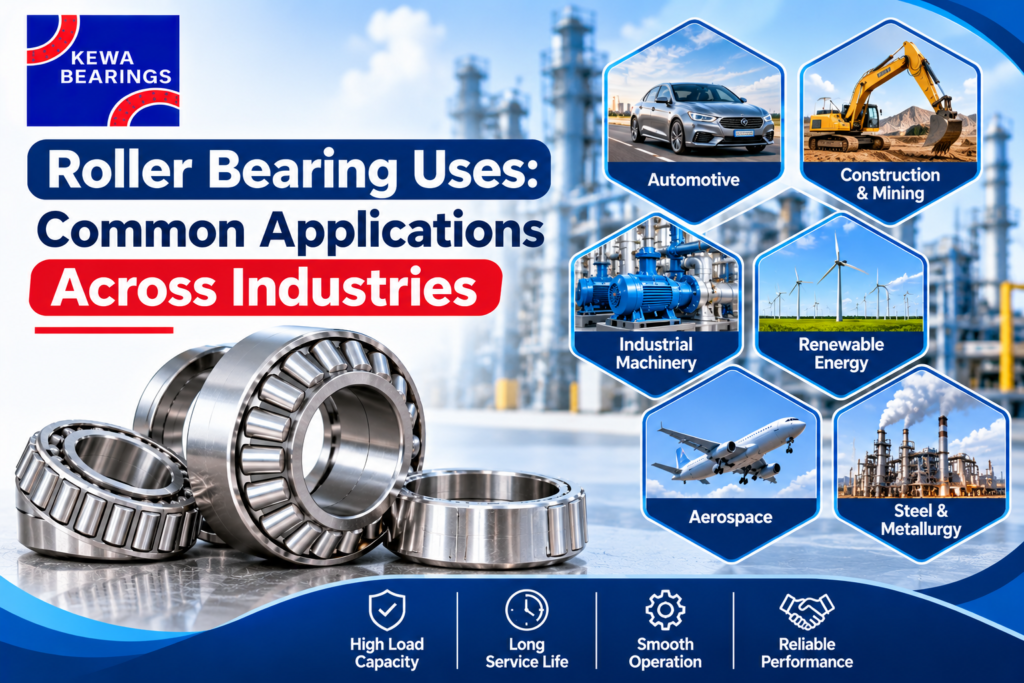
Roller bearings are important mechanical components used in various types of industrial machinery and equipment. They help reduce friction between moving parts, support heavy loads, and ensure smooth machine operation. From automobiles and construction equipment to manufacturing plants, these bearings play an essential role in improving mechanical performance.
Different industries require different types of roller bearings depending on their load capacity, operating speed, and working conditions. Understanding roller bearing uses can help businesses select suitable bearings for their machinery and improve equipment efficiency.
In this blog, we will explore the common applications of roller bearings across different industries and understand their importance in modern machinery.
What Is a Roller Bearing?
A roller bearing is a mechanical component that uses cylindrical, tapered, spherical, or needle-shaped rolling elements to reduce friction between moving surfaces. Unlike ball bearings, roller bearings have a larger contact area, allowing them to support heavier loads.
Common types include cylindrical roller bearings, tapered roller bearings, spherical roller bearings, and needle roller bearings. Each type is designed for specific industrial applications and operating requirements.
Common Roller Bearing Uses Across Industries
Roller bearings are used in several industries to support rotating components and maintain smooth machinery performance. Let’s look at their major applications.
1. Automotive Industry
The automotive industry uses roller bearings in different vehicle components to reduce friction and support mechanical movement.
Common applications include wheel hubs, axle assemblies, gearboxes, transmission systems, and differential mechanisms.
Tapered roller bearings are commonly used in wheel hubs because they can handle both radial and axial loads. They help improve vehicle stability and support reliable performance.
2. Manufacturing Industry
Manufacturing plants depend on machinery that operates continuously for long hours. One of the important roller bearing uses in this sector is supporting rotating shafts and reducing friction in industrial equipment.
They are commonly used in conveyor systems, rolling mills, machine tools, electric motors, and production lines. These applications require durable bearings to maintain smooth operations and minimise unexpected downtime.
3. Construction Industry
Construction machinery operates under heavy loads, vibration, dust, and challenging working conditions. Bearings help these machines perform efficiently during demanding activities.
Excavators, cranes, bulldozers, concrete mixers, and road rollers are some common examples. Spherical roller bearings are particularly useful in equipment that experiences heavy loads and shaft misalignment.
4. Agricultural Industry
Agricultural equipment works in environments where dust, dirt, and moisture are common. Reliable bearings help maintain the performance of farming machinery.
Tractors, harvesters, threshers, seed drills, and other agricultural machines use roller bearings to support rotating parts. These roller bearing uses help improve equipment performance and reduce the chances of frequent breakdowns.
5. Mining Industry
Mining machinery handles heavy materials and operates under continuous pressure. It requires strong mechanical components that can withstand vibration and demanding working conditions.
Roller bearings are used in crushers, conveyor systems, vibrating screens, drilling equipment, and material-handling machinery. Their load-carrying capacity makes them suitable for heavy-duty mining applications.
6. Power Generation Industry
Power plants depend on large rotating machines that require reliable bearing support. Roller bearings are commonly used in turbines, generators, industrial motors, cooling systems, and fans.
These roller bearing uses help support rotating shafts, reduce friction, and maintain consistent machine performance. Proper lubrication and maintenance are important for their long-term operation.
7. Railway Industry
Railway equipment carries heavy loads and operates for extended periods. Bearings play an important role in supporting different moving components.
They are used in railway wheelsets, axle assemblies, locomotive machinery, and gearboxes. Tapered roller bearings are particularly useful because they can handle combined radial and axial loads.
Benefits of Roller Bearings in Industrial Machinery
Understanding roller bearing uses also highlights the benefits these components offer to different industries.
High Load Capacity: Their larger contact area allows them to support heavy loads in demanding applications.
Reduced Friction: Rolling elements minimise friction between moving surfaces and support smooth operation.
Improved Durability: Suitable roller bearings can provide reliable performance under challenging working conditions.
Better Efficiency: Reduced mechanical friction helps machinery operate more efficiently.
Versatile Applications: Different designs are available to meet specific industrial requirements.
How to Choose the Right Roller Bearing?
Selecting the right bearing is important for maintaining machinery performance. Consider these factors before making a decision:
- Load Capacity
- Operating Speed
- Working Conditions
- Lubrication
- Maintenance
Consulting an experienced supplier like Kewa Bearings can help you find suitable products for your industrial applications.
Conclusion
Roller bearings are essential components in automotive, manufacturing, construction, agricultural, mining, power generation, and railway industries. They help reduce friction, support heavy loads, and improve machinery performance.
Understanding roller bearing uses makes it easier to identify the right bearing for different applications. Choosing quality products from a reliable supplier like Kewa Bearings can help businesses improve equipment efficiency, reduce maintenance requirements, and achieve dependable machine operation.
Frequently Asked Questions (FAQs)
1. What is the main function of a roller bearing?
It reduces friction between moving parts and supports mechanical loads.
2. Which roller bearing is suitable for heavy loads?
Spherical and cylindrical roller bearings are commonly used for heavy-load applications.
3. Are roller bearings used in cars?
Yes, they are used in wheel hubs, gearboxes, axles, and transmission systems.
4. Can roller bearings handle axial loads?
Certain types, such as tapered roller bearings, can handle both radial and axial loads.
5. Where are spherical roller bearings commonly used?
They are used in mining equipment, construction machinery, and industrial conveyor systems.
6. Do roller bearings require lubrication?
Yes, proper lubrication helps reduce friction, heat, and premature wear.
7. Can roller bearings operate at high speeds?
Yes, depending on their design, size, lubrication, and operating conditions.
8. What causes roller bearing failure?
Poor lubrication, contamination, incorrect installation, and excessive loading can cause failure.
9. How often should roller bearings be inspected?
Inspection frequency depends on operating conditions and the manufacturer’s maintenance recommendations.
10. How can I find quality industrial roller bearings?
Choose an experienced bearing supplier that offers suitable products for your machinery and application.