
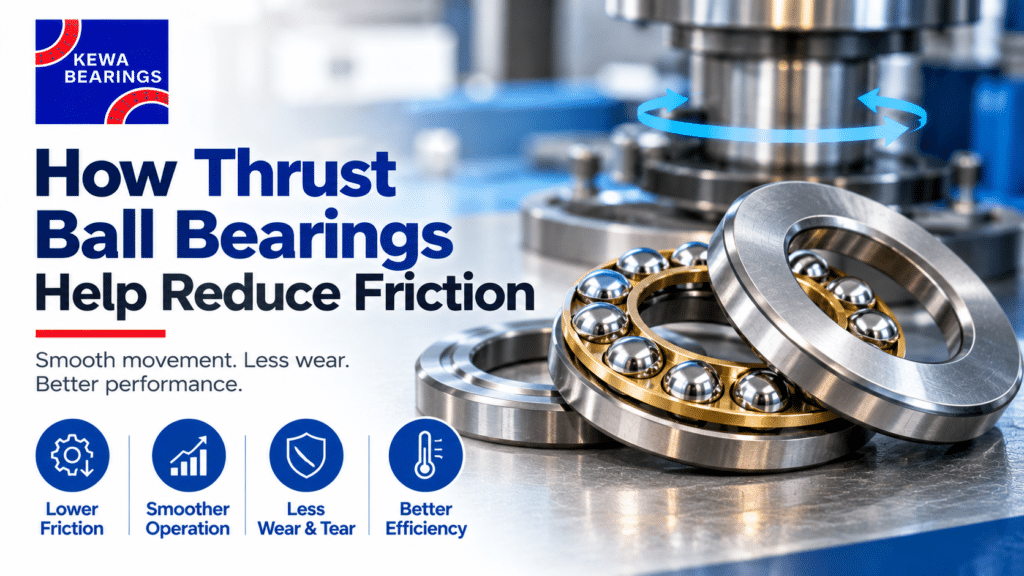
In industrial machinery, reducing friction improves performance, efficiency, and equipment life. Bearings minimise resistance, heat, and wear by supporting moving parts. Thrust ball bearings provide low-friction rotation, reducing friction while supporting axial loads between rotating and stationary surfaces. These bearings are used in industrial machinery, automotive components, and other mechanical applications. Understanding their working principles and benefits helps businesses choose the right bearing for reliable performance.
What Is a Thrust Ball Bearing?
A thrust ball bearing is designed to support axial loads acting along a shaft’s axis. Unlike radial bearings, it handles forces that push or pull along the shaft. It consists of two washers, steel balls, and a cage that keeps the balls properly spaced during operation.
The balls roll between the washers, reducing friction and allowing smoother rotation. This design helps minimise wear and supports efficient machinery performance. These bearings are commonly used in industrial equipment and suitable mechanical applications. However, they are primarily designed for axial loads and generally cannot handle significant radial loads.
How Thrust Ball Bearings Reduce Friction
Friction develops when two surfaces move against each other. In machinery, excessive friction can increase operating temperatures, waste energy, and accelerate component wear. Thrust ball bearings help address these problems through several important design features.
1. Rolling Contact Instead of Sliding Contact
One of the primary ways bearings reduce friction is by using rolling elements. In a sliding mechanism, two surfaces move directly against each other, creating resistance. In a bearing, steel balls roll between the bearing washers and allow relative movement with less friction.
Rolling contact generally requires less energy than sliding contact under comparable conditions. As a result, the machinery can rotate more smoothly and operate more efficiently.
This feature is particularly useful in equipment where axial forces are present during rotation. By reducing unnecessary resistance, the bearing helps maintain consistent movement and supports dependable machine operation.
2. Proper Distribution of Axial Loads
Uneven loading can increase friction, create excessive contact stress, and cause premature damage to mechanical components. Thrust ball bearings are designed to support axial forces through the rolling elements and raceways.
When the bearing is correctly selected and installed, the load is transmitted through the balls to the raceways. Proper load distribution helps prevent excessive stress on individual components and supports stable rotation.
However, the bearing must operate within its specified load capacity. Excessive axial pressure can deform contact surfaces, increase friction, and shorten the component’s service life. Correct sizing is therefore essential for achieving the intended performance.
3. Reduced Direct Contact Between Components
The balls inside a bearing separate the two raceways and provide controlled rolling movement. This arrangement reduces the amount of direct sliding contact between the primary bearing surfaces.
Although rolling contact still produces some friction due to elastic deformation, lubrication, and microscopic surface interactions, it generally offers lower resistance than direct sliding under suitable operating conditions.
A properly selected thrust ball bearing can therefore help reduce mechanical resistance and support smoother movement in equipment that experiences axial loading.
4. Controlled Movement Through a Ball Cage
The cage is another important part of the bearing assembly. It keeps the balls separated and helps maintain their correct positions during operation.
Without proper spacing, the balls could come into excessive contact with one another, potentially increasing friction and causing uneven movement. The cage helps guide the rolling elements and supports more consistent operation.
Its design also helps maintain the arrangement of the rolling elements under normal operating conditions. When combined with suitable lubrication and correct installation, this feature contributes to reliable bearing performance.
Key Benefits of Reducing Friction in Machinery
Reducing friction offers several advantages for industrial and mechanical systems. Thrust ball bearings can contribute to these benefits when they are used within their intended operating conditions.
Improved Energy Efficiency
Excessive friction means machinery requires more energy to maintain movement. By reducing resistance between moving components, bearings can help lower mechanical power losses.
This can be valuable in equipment that operates frequently or for extended periods. Although the overall energy savings depend on the complete machine design, bearing condition, speed, and load, reducing unnecessary friction supports efficient operation.
Lower Heat Generation
Friction produces heat, and excessive temperatures can affect lubricants, seals, and nearby components. By reducing resistance during rotation, thrust bearings can help limit friction-related heat generation.
However, bearings may still become hot because of excessive loading, incorrect lubrication, misalignment, or operating speeds beyond their design limits. Regular monitoring helps identify these issues before they lead to serious damage.
Reduced Wear and Longer Service Life
Continuous friction can gradually damage bearing surfaces and other mechanical parts. Rolling contact helps reduce this wear when the bearing is properly installed, lubricated, and operated within its recommended limits.
Lower wear can help reduce the frequency of component replacement and maintenance interruptions. It also supports the consistent performance of machinery over time.
Smoother Mechanical Operation
Excessive resistance can interfere with smooth rotation and affect equipment performance. A correctly selected bearing helps maintain controlled movement under axial loading.
Smooth operation is particularly important in precision equipment and mechanical assemblies where consistent rotation contributes to overall performance. Proper mounting and maintenance are equally important for achieving these results.
Applications of Thrust Ball Bearings
Thrust ball bearings are used in different industries where axial forces need to be supported during rotational movement. Their suitability depends on factors such as load, speed, temperature, available space, and operating conditions.
Automotive Components
Certain automotive assemblies use thrust bearings to manage axial forces and support controlled movement. Depending on the vehicle design, these bearings may be found in steering-related mechanisms, clutch assemblies, or other suitable mechanical arrangements.
The correct bearing specification is essential because automotive components may experience changing loads, vibration, and varying operating temperatures.
Industrial Machinery
Industrial machines often contain rotating shafts and components that experience axial forces. Suitable thrust bearings can help support these forces and reduce resistance in compatible assemblies.
They may be used in machine tools, selected pumps, gear-related mechanisms, and other industrial equipment. The final choice depends on the application’s load requirements and operating speed.
Pumps and Compressors
Some pump and compressor designs require bearings to manage axial forces generated during operation. Suitable thrust bearings can support the relevant components and help maintain stable movement.
However, not every pump or compressor uses a thrust ball bearing. Engineers must consider the equipment’s design, load direction, speed, and lubrication requirements before choosing a bearing.
Electrical and Mechanical Equipment
Certain electric motors, specialised rotating equipment, and mechanical assemblies may require axial load support. In suitable designs, thrust ball bearings help maintain controlled movement while limiting unnecessary friction.
Selecting a bearing that matches the equipment’s operating conditions is important for maintaining efficiency and avoiding premature failure.
Factors That Influence Friction in Thrust Ball Bearings
There are several other factors involved in the operation of a bearing which affect the efficiency of a bearing more than just its design.
Lubrication Quality
For reduced friction and protection of contact surfaces in the bearing, lubrication is critical. The correct lubrication will also minimize the bearing’s wear, heat and other damage due to insufficient lubrication.
Depending on the bearing design and the environment it will be operating in, the appropriate choice would be either grease or oil. The lubricant type, quantity, and replacement interval should follow the manufacturer’s recommendations.
Too little lubricant can increase friction and wear, while excessive or unsuitable lubrication may also create problems, particularly at higher speeds.
Load Capacity
Every bearing has specified load limits. Operating beyond these limits can increase contact stress, deformation, and friction.
Before selecting a thrust ball bearing, users should determine the expected axial load and check the manufacturer’s ratings. Standard thrust ball bearings are primarily designed for axial forces and generally have limited ability to accommodate radial loads.
Operating Speed
Bearing cage design and the type of lubrication used as well as dimensions and bearing load all determine the speed at which the bearing can be operated.
Also, if you put a moderate-speed bearing into a high-speed application, you may experience bearing performance issues. Choosing a bearing according to the manufacturer’s speed recommendations helps prevent overheating and premature wear.
Installation and Alignment
Incorrect installation can create uneven loading and interfere with the rolling movement of the balls. Contamination, damaged raceways, and unsuitable mounting arrangements can also increase friction.
Adherence to bearing installation and maintenance practices keeps your machine productive. Providing the bearing with support that is straight, flat, and parallel helps guarantee consistent, long-term bearing operation.
Maintenance Tips for Better Bearing Performance
Thrust ball bearings last longer and perform more efficiently when they are well maintained. Inspect bearings for unusual noise, vibration, overheating, or visible damage. Use the recommended lubricant, prevent dust and moisture contamination, and replace worn or damaged bearings promptly. These practices help reduce friction, prevent unexpected failures, and ensure smooth machinery operation.
How to Choose the Right Thrust Ball Bearing
It’s important to look at the axial load, the operating speed, and the temperature at which the bearing will operate when you select your thrust ball bearing. Additionally, the size, type, and lubrication system used in your machine should also influence your bearing selection. Kewa Bearings offers industrial solutions that address these issues and will provide equipment performance optimization when paired with the proper selection and maintenance.
Conclusion
Thrust ball bearings make machinery run smoothly, and reduce friction and support axial loads. Properly selected bearings, and regular maintenance of bearings can help eliminate wear and improve equipment performance and extend bearing life. Kewa Bearings offers bearings that meet the needs of many industrial and mechanical applications.
Frequently Asked Questions (FAQs)
1. What is a thrust ball bearing?
It supports axial loads and enables smooth rotation.
2. How does a thrust ball bearing reduce friction?
Its rolling balls reduce resistance between moving surfaces.
3. Can thrust ball bearings support radial loads?
They are primarily designed for axial loads.
4. What is the application of thrust ball bearings?
They are used in industrial machinery, pumps, and automotive assemblies.
5. Does lubrication reduce bearing friction?
Yes, proper lubrication reduces friction and wear.
6. What causes a thrust bearing to overheat?
Several factors can contribute to overheating, such as inadequate lubrication, excessive loading, and incorrect installation.
7. Are thrust ball bearings suitable for high speeds?
Some designs support high speeds, depending on their specifications.
8. How can bearing life be improved?
Use proper lubrication, correct installation, and regular maintenance.
9. What are the factors to consider when choosing a thrust ball bearing?
Consider the load, speed, dimensions, and operating conditions.
10. Why is bearing maintenance important?
It helps prevent damage and reduces equipment downtime.