
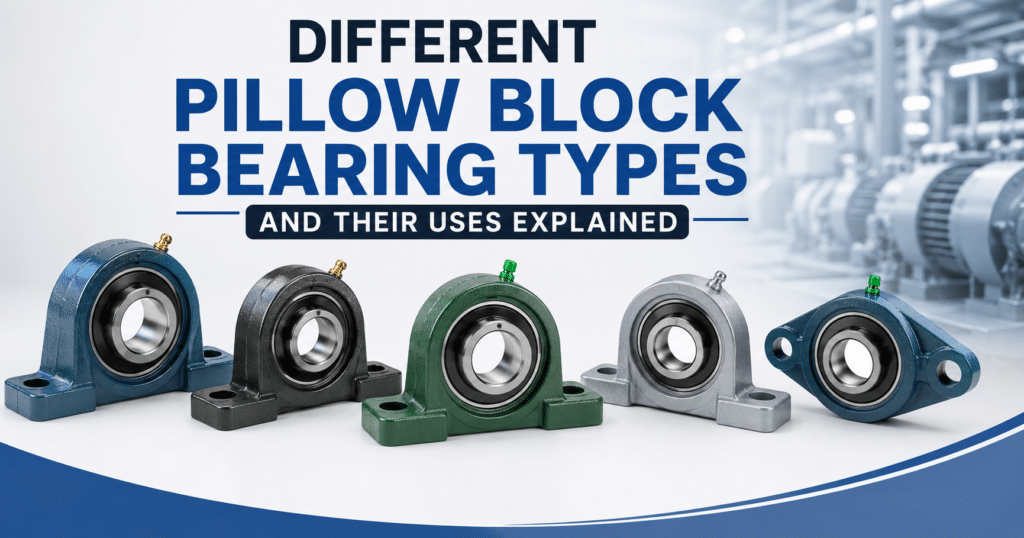
In a lot of industries, machines run on and on for long hours, and bearings quietly help them keep running smoothly in the background, like they are doing nothing, but they are. A dependable pillow block bearing type works with moving shafts, lowers friction, and aids in avoiding machine damage. From factory conveyors to small workshop equipment, these bearings matter a great deal for keeping machines productive and for reducing repair headaches.
What Is a Pillow Block Bearing?
A pillow block bearing is a mounted bearing placed inside a housing unit that supports rotating shafts. The housing is bolted onto a machine surface, which makes installation easier compared to many other bearing arrangements.
One reason industries prefer a pillow block bearing type is because it saves both time and effort during maintenance. Instead of dealing with complicated setups, technicians can easily replace or lubricate these bearings when required.
Common Pillow Block Bearing Types
Ball Bearing Pillow Blocks
This is probably the most commonly used type in regular industrial applications. Ball bearing pillow blocks are suitable for machines running at moderate to high speeds.
They are often used in packaging machines, textile equipment, and small conveyor systems. Many factory owners prefer this type because it works efficiently without requiring constant attention.
Roller Bearing Pillow Blocks
Heavy machines need more solid support, and that is where roller bearing pillow blocks fit in, you know. The bearings themselves are built to take heavier loads, plus they keep performing in rough operating conditions.
You will often see this pillow block bearing style in mining gear, cement plants, and building machinery, where the machines run continuously, under load and pressure. They are built to handle tough environments much better than standard ball bearings.
Split Pillow Block Bearings
Anyone working in industrial maintenance knows how frustrating it can be to remove an entire shaft just to replace a bearing. Split pillow block bearings help solve that issue.
Their housings open into two parts, making the inspection and swap outs easier, you know. Sectors such as steel plants and paper mills often rely on them because they help lessen downtime during the fixing period, really.
Stainless Steel Pillow Block Bearings
Some industries deal with moisture, chemicals, or regular washing processes. In such conditions, ordinary bearings may rust quickly.
Stainless steel bearings are specially designed for these environments. Food processing units, dairy plants, and pharmaceutical companies commonly use this pillow block bearing type because it offers better corrosion resistance and cleaner operation.
Thermoplastic Pillow Block Bearings
These bearings are light in weight, and they work well where you have chemicals and water around, so the machines don’t really struggle. You will often see them in beverage plants, and also in water treatment facilities.
Even if they are lighter than metal bearings, they still deliver dependable operation for certain industrial applications.
Where Are Pillow Block Bearings Used?
Pillow block bearings get used in a lot of ordinary industrial jobs. You see them on conveyor systems, agricultural machines, printing equipment, and in manufacturing units too, helping the shaft move in a smooth way.
In fact, quite a few industries select a particular pillow block bearing type based on operating conditions, not only the machine size. For example a food factory might put corrosion resistance first, while a mining plant may concentrate more on heavy load ability, depending on what is happening day to day.
Choosing the Right Bearing Matters
Picking the wrong bearing can end up with constant servicing and machine downtime, it just happens more often than you’d expect. Before you select a bearing, you really have to look at things like load, rotation rate speed, moisture levels and temperature, all of those matter. Better bearings might seem more expensive at the start, but they often have a longer service life and that tends to lower the overall repair costs.
Conclusion
Machines seem to run smoother when the right bearings are in place. Picking the correct pillow block bearing type matters too; it can boost performance, lessen downtime, and help machines last longer. In practice, it feels more stable, but also less fussy, about the load.
Kewa Bearings provides dependable bearing solutions made for efficient and durable industrial operation, so the machine keeps moving with fewer headaches and better consistency.
FAQs
Which pillow block bearing is best for heavy loads?
Roller bearing pillow blocks are best for heavy-load applications.
Are pillow block bearings suitable for wet environments?
Yes, stainless steel types work well in wet conditions.
Why are split pillow block bearings useful?
They make maintenance and replacement easier.
Can pillow block bearings reduce machine wear?
Yes, they help reduce friction and vibration.
Where are thermoplastic pillow block bearings used?
They are mostly used in chemical and water-treatment industries.