
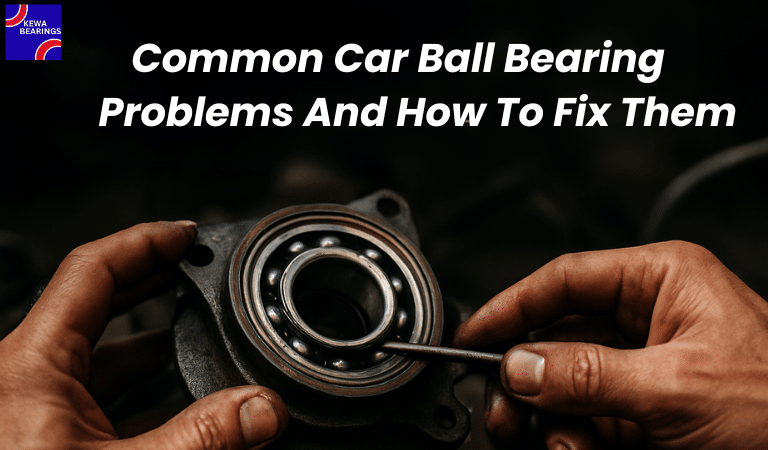
Ball bearings are some of the most important parts of the mechanism of a car. These enable the wheels to revolve smoothly and minimize friction between moving parts to ensure a smooth drive. All these small components bear considerable loads and motion in any ball bearing car. Just like most mechanical components, they will also wear out over time or simply get damaged. There is an array of common ball bearing issues in a car. If you know how to fix them, it’s good to maintain their working smoothness, safety, or longevity at least.
Understanding the Role of Ball Bearings in Cars
Ball bearings are precisely manufactured and designed to be fitted in various sections of a car, most noticeably in the wheels, transmission and the engine. They help smooth the rotation of surfaces. In a ball bearing car, bearings aid in the smooth running of wheels, hence maintaining uniformity in weight distribution. When these components get worn out, one will as a driver, one will feel such things as vibrations, funny sounds and also improper steering, which all show it is high time to check or change the bearings.
Common Car Ball Bearing Problems
1. Worn-Out Bearings
With bearings facing continual friction and stress, there is a resultant… exfoliation. You might hear crushing or humming sounds as you turn or accelerate.
Fix: Get those damaged bearings replaced at the soonest opportunity. Always go for the best for long life; consider Kewa Bearings.
2. Poor Lubrication
Bearings require lubrication in order to work smoothly. Dry grease or leakage leads to overheating of the bearing, thus resulting in premature wear.
Fix: Open bearings need a temporary regrease with good grease. Sealed bearings shall never be regreased; if the lubricant is lost, your only option to regain functionality is permanent replacement of the bearing.
3. Contamination
Depending on their use, water, dirt, or dust could cause corrosion or uneven motion inside the bearings. This is commonly faced in journeys on muddy or wet roads.
Fix: Keep the seals clean and intact. Replace bearing units every time one is contaminated.
4. Improper Installation
This is another reason that very often bearings fail: because of wrong fitting, that is to say, without correct alignment; or because of uneven pressure during installation.
Fix: Have your bearings installed by developers or competent mechanics, using special tools and proper alignment techniques.
5. Overloading or Impact Damage
If overdone, bearing damage may occur internally, which causes vibrations and wheel instability in the vehicle, while hitting potholes will have a similar effect.
Fix: Avoid excessive loads and take it easy on rough roadways. Damaged bearings must be replaced after heavy shocks.
Signs of a Failing Bearing
A ball bearing car usually gives warning signs before failure:
- Grinding or rumbling noises are heard from the wheels
- Steering vibrations
- Tires wear unevenly
- Spy for mediocre braking abilities
On noticing any of the above signs, ensure an immediate checkup for the car to prevent more damage.
Maintenance Tips
Keeping your bearings in good condition is easy with a little care:
- Inspect bearings during regular servicing
- Avoid direct high-pressure washing near wheel hubs
- Replace broken seals quickly
- The tires must be kept in proper balance and alignment.
This will ensure that your bearings will last for a long time and that you will have a comfortable ride.
Why Choose Kewa Bearings
Kewa bearings are strong, durable, and precise. They reduce friction, carry heavy loads under any condition, even if tough, while being made from premium materials — all to keep your ball bearing car running smoothly.
Conclusion
Ball bearings are very small in size, but they are an important part of the performance and safety of the machinery. Neglecting the initial signs of wear may bring about a lot of impairment and repair bills. With knowledge of these typical issues and their practical solutions, you may keep the car in good condition for quite a long time. Ball bearings from Kewa Bearings help in maintaining the ball bearing car’s safety functionality, as well as allowing one to go as far as needed.
FAQs
Q1. How long does the usual car ball bearing last?
Depending on the style of driving and conditions, car ball bearings work for an average of 80,000 and 120,000 kilometers.
Q2. What if I ignore a bad bearing?
When ignored, this can cause wheel lock-up or damage to other associated parts like the hub or suspension.
Q3. Are sealed bearings lubricable?
No, sealed bearings are pre-lubricated in the factory and should be replaced when worn out.
Q4. Why is my car making humming noise while driving?
Usually, the onset of a humming sound signals that the ball bearings are either worn or dry.
Q5. Are Kewa Bearings suitable for all car types?
Yes, Kewa Bearings are designed to fit a wide range of vehicles, offering excellent performance and durability.