
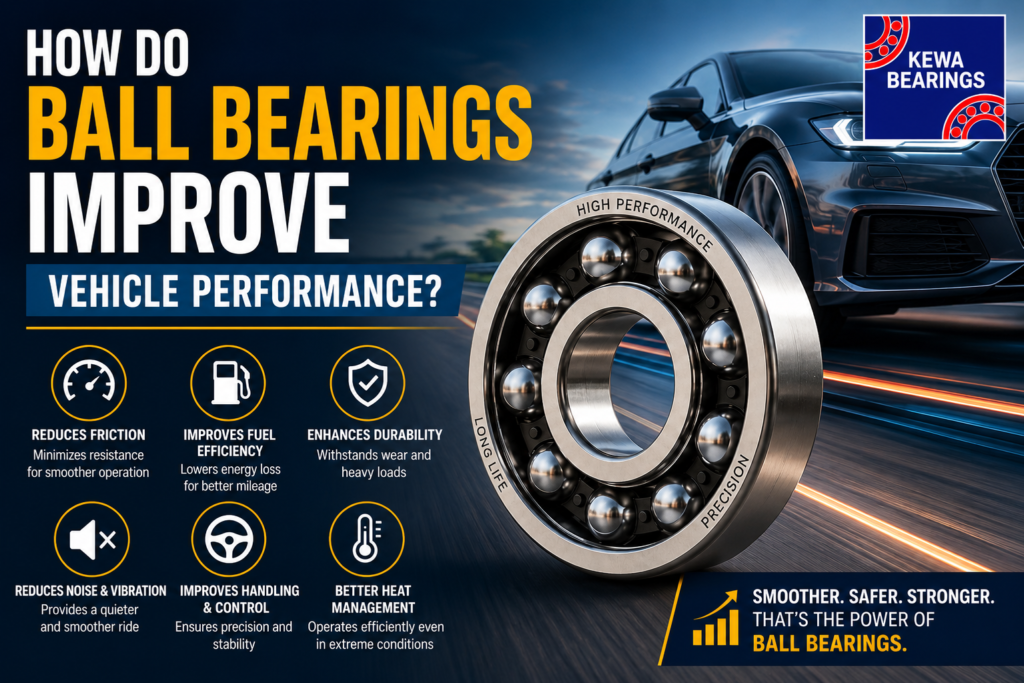
There are hundreds of moving parts in a vehicle that are crucial to delivering a smooth, efficient, and safe driving experience. Among these components, ball bearings play a vital role in reducing friction, supporting rotating parts, and improving overall vehicle performance. Whether you drive a passenger car, commercial vehicle, or high-performance automobile, the quality of your bearings directly affects efficiency, fuel economy, and driving comfort.
In this blog, we’ll explore how ball bearing car components work, their importance, benefits, common applications, and tips for choosing the right bearings for your vehicle.
What Is a Ball Bearing?
A ball bearing is some mechanical component meant to lower friction between parts that are moving, while also taking care of radial and axial loads. Basically it is built from tiny steel, or even ceramic balls, which sit between two rings referred to as races, and that’s about it. As the balls roll instead of slide, friction is significantly reduced, allowing parts to rotate smoothly.
In a modern ball bearing car, these bearings are found in various systems, ensuring reliable performance and extending the lifespan of essential automotive components.
Why Are Ball Bearings Important in Vehicles?
Every vehicle contains numerous rotating parts that operate continuously while driving. Without ball bearings, these components would experience excessive friction, resulting in wear, overheating, and reduced efficiency.
Ball bearings help by ensuring smooth movement, minimizing energy loss, reducing maintenance requirements, and improving the overall reliability of the vehicle. They also contribute to quieter operation and enhanced driving comfort.
How Ball Bearings Improve Vehicle Performance
Reduce Friction
One of the biggest advantages of a ball bearing car is reduced friction. Ball bearings allow rotating parts to move freely with minimal resistance. Lower friction means less energy is wasted, allowing the engine and drivetrain to perform more efficiently.
Reduced friction also decreases heat generation, preventing premature wear of vehicle components.
Improve Fuel Efficiency
When moving parts operate smoothly, the engine doesn’t have to work as hard to overcome resistance. This directly contributes to improved fuel economy.
High-quality ball bearings reduce mechanical losses throughout the drivetrain, helping vehicles consume less fuel over time.
Enhance Driving Comfort
Smooth rotation of wheels, steering systems, and transmission components results in a quieter and more comfortable driving experience.
A properly maintained ball bearing car experiences fewer vibrations and reduced operational noise, making every journey more enjoyable.
Increase Component Lifespan
Continuous friction causes rapid wear of automotive parts. Ball bearings distribute loads evenly and minimize direct metal-to-metal contact.
This protection extends the lifespan of components such as wheel hubs, alternators, transmissions, and electric motors while reducing repair costs.
Support High-Speed Operation
Modern vehicles often operate at high rotational speeds. Ball bearings are specifically designed to perform efficiently under these demanding conditions.
Their precision construction allows them to maintain stability even at high RPMs, ensuring reliable performance during long drives or highway travel.
Improve Steering Precision
Ball bearings help steering systems operate smoothly with minimal resistance. Drivers experience better steering response, improved handling, and greater control over the vehicle.
This becomes especially important when navigating sharp turns or driving on uneven roads.
Reduce Maintenance Costs
Since ball bearings reduce wear on surrounding components, maintenance requirements decrease significantly.
Investing in quality bearings means fewer breakdowns, longer service intervals, and lower replacement expenses over the vehicle’s lifetime.
Common Applications of Ball Bearings in Cars
A ball bearing car uses bearings in numerous systems throughout the vehicle. Some of the most common applications include:
Wheel Hubs
Wheel bearings allow wheels to rotate smoothly while supporting the vehicle’s weight. They are among the most important safety-related bearings in any automobile.
Transmission Systems
Bearings inside the gearbox support rotating shafts and gears, ensuring smooth power transmission from the engine to the wheels.
Alternators
The alternator contains ball bearings that allow the rotor to spin efficiently while generating electricity for the vehicle.
Water Pumps
Water pump bearings enable continuous coolant circulation, preventing engine overheating and maintaining optimal operating temperatures.
Air Conditioning Compressors
Ball bearings support compressor shafts, allowing the air conditioning system to operate quietly and efficiently.
Electric Motors
Modern vehicles contain several electric motors for power windows, cooling fans, electric steering, and hybrid drive systems. Ball bearings ensure reliable motor performance.
Steering Column
Bearings in the steering system reduce friction, improving steering accuracy and driver comfort.
Signs That Ball Bearings Need Replacement
Although ball bearings are highly durable, they eventually wear out due to continuous use and harsh operating conditions.
Common warning signs include:
- Unusual grinding or humming noises from the wheels
- Excessive vibration while driving
- Loose steering feel
- Uneven tire wear
- Increased wheel play
- Reduced fuel efficiency
- Difficulty in smooth wheel rotation
Ignoring these symptoms can lead to serious mechanical damage and compromise vehicle safety.
Choosing the Right Ball Bearings for Your Vehicle
Selecting high-quality bearings is essential for achieving maximum performance and durability.
Consider the following factors before purchasing:
Material Quality
Premium-grade steel bearings offer excellent strength, wear resistance, and long service life. Some specialized applications may also use ceramic bearings for higher speeds.
Load Capacity
Choose bearings designed to handle your vehicle’s operating loads. Heavy-duty vehicles require bearings with greater load-bearing capacity.
Precision Manufacturing
High-precision bearings ensure smoother operation, lower vibration, and better overall efficiency.
Sealing Protection
Sealed bearings protect internal components from dust, moisture, and contaminants, extending service life.
Brand Reliability
Always purchase bearings from trusted manufacturers known for quality, consistency, and industry standards.
Maintenance Tips for Longer Bearing Life
Proper maintenance can, like really extend, the ball bearings lifespan quite a lot, if you do it right. Keep wheel alignment properly adjusted to reduce unnecessary stress on bearings. Inspect bearings during routine vehicle servicing and replace damaged seals promptly. Avoid overloading the vehicle beyond its recommended capacity. Ensure proper lubrication where applicable, and replace worn bearings before they cause additional damage to nearby components.
Regular maintenance not just boosts vehicle performance it also makes the whole thing safer, like you might expect.
Why Quality Ball Bearings Matter
Low-quality bearings may seem economical initially, but they often wear out faster, generate more friction, and increase maintenance costs. Premium bearings offer better precision, longer durability, improved load handling, and consistent performance under varying driving conditions.
For automotive manufacturers, repair professionals, and vehicle owners, investing in reliable bearings results in better efficiency, reduced downtime, and enhanced driving confidence.
Why Choose Kewa Bearings?
Kewa Bearings is committed to delivering precision-engineered bearing solutions that meet the demanding requirements of modern automotive applications. Manufactured using high-quality materials and advanced production processes, Kewa bearings are designed for durability, smooth operation, and consistent performance.
Whether you’re looking for bearings for passenger vehicles, commercial fleets, or industrial automotive applications, Kewa Bearings offers dependable products that help improve efficiency, reduce wear, and ensure long-lasting reliability.
Conclusion
A ball bearing car depends on high-quality ball bearings to deliver smooth performance, improved fuel efficiency, enhanced safety, and longer component life. From wheel hubs and transmissions to steering systems and electric motors, these small yet essential components play a major role in every journey.
Choosing premium bearings and maintaining them properly ensures better vehicle performance, reduced maintenance costs, and a more comfortable driving experience. If you’re looking for reliable automotive bearing solutions, Kewa Bearings has trusted products made to match the highest standards of quality and performance. Honestly it’s built for the real road use, you know, strong and consistent.
FAQs
1. What is a ball bearing car?
A ball bearing car refers to a vehicle that uses ball bearings in critical components like wheels, transmissions, and steering systems for smooth and efficient operation.
2. How do ball bearings improve vehicle performance?
They reduce friction, support rotating parts, improve fuel efficiency, and ensure smoother driving with less wear on components.
3. Where are ball bearings commonly used in cars?
Ball bearings are used in wheel hubs, gearboxes, alternators, water pumps, air conditioning compressors, and electric motors.
4. How long do automotive ball bearings last?
With proper maintenance, quality ball bearings can typically last between 100,000 and 150,000 kilometers, depending on driving conditions.
5. What are the signs of a failing ball bearing?
Common signs include grinding or humming noises, wheel vibrations, uneven tire wear, and loose steering.
6. Can worn ball bearings affect fuel efficiency?
Yes. Damaged or worn bearings create more friction, causing the engine to work harder and consume more fuel.
7. Do ball bearings require regular maintenance?
Most modern sealed ball bearings require minimal maintenance, but they should be inspected during routine vehicle servicing.
8. Why is choosing a high-quality ball bearing important?
High-quality bearings provide better durability, smoother performance, lower maintenance costs, and a longer service life.
9. Can a damaged ball bearing affect driving safety?
Yes. A worn or damaged ball bearing can impact wheel stability, steering control, and braking performance, making timely replacement essential.
10. How do I choose the right ball bearing for my car?
Select bearings that match your vehicle’s specifications, load requirements, and are manufactured by a trusted brand like Kewa Bearings for reliable performance.