
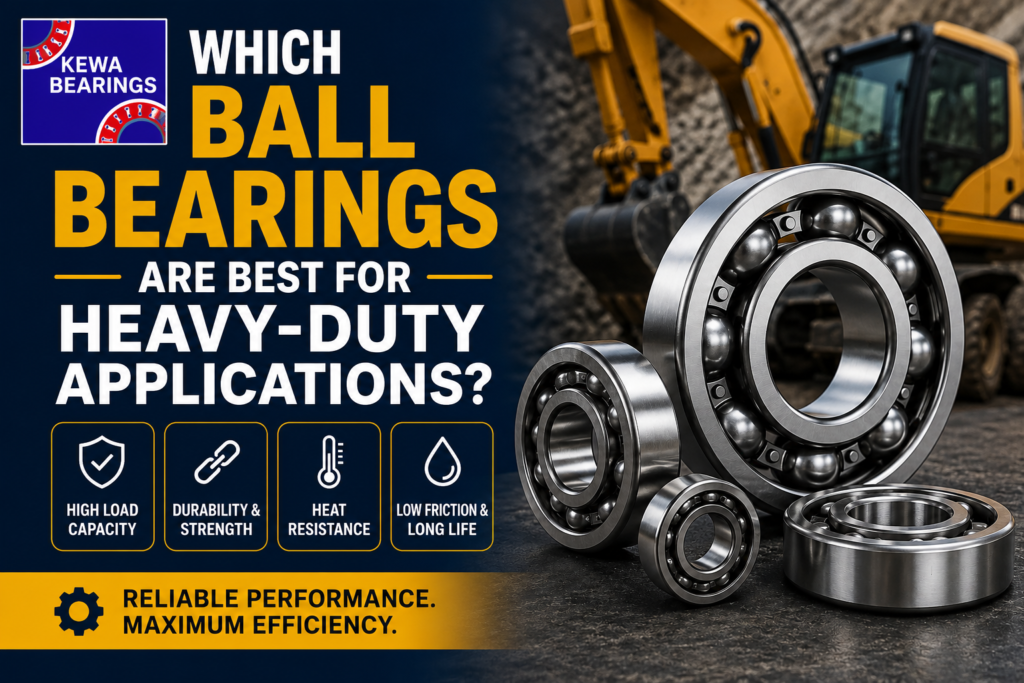
Heavy-duty machinery operates under demanding conditions every day. Whether it is construction equipment, mining machines, agricultural vehicles, industrial motors, or manufacturing systems, every moving part must handle high loads, continuous operation, and harsh environments. One of the most important components that keeps these machines running efficiently is ball bearings.
Selecting the right ball bearings for heavy-duty applications is essential for improving machine performance, reducing maintenance costs, and increasing equipment lifespan. However, not every bearing is designed to withstand extreme pressure or heavy loads. Understanding the different types and their applications can help industries make the right choice.
In this guide, we’ll explore the best ball bearings for heavy-duty applications, their features, and the factors to consider before selecting one.
Why Ball Bearings Matter in Heavy-Duty Equipment
Ball bearings reduce friction between moving parts while supporting radial and axial loads. They allow shafts to rotate smoothly, minimize wear, and improve energy efficiency.
In heavy-duty industries, bearings are constantly exposed to:
- High operating loads
- Continuous vibration
- Dust and contaminants
- Moisture and chemicals
- High temperatures
- Long working hours
Picking the wrong bearing can result in overheating, getting things to fail too soon, and then that costly downtime that just happens, or at least it feels like it does. That’s why selecting bearings specifically designed for demanding environments is critical.
Features of Heavy-Duty Ball Bearings
Heavy-duty ball bearings are manufactured with stronger materials and advanced engineering to perform reliably under extreme conditions.
Some important features include:
- High load-carrying capacity
- Superior wear resistance
- Precision manufacturing
- Heat-treated bearing steel
- Excellent lubrication retention
- Corrosion-resistant designs
- Reduced friction for smoother operation
- Longer service life
These features are meant to make sure performance stays reliable even when industrial environments get kinda challenging, you know.
Best Types of Ball Bearings for Heavy-Duty Applications
Deep Groove Ball Bearings
Deep groove ball bearings are among the most commonly used bearings across industries. They are designed to support both radial and moderate axial loads while operating at high speeds.
These bearings are suitable for:
- Electric motors
- Industrial pumps
- Gearboxes
- Compressors
- Agricultural equipment
Their simple design, low maintenance, and durability make them a preferred choice for many heavy-duty applications.
Angular Contact Ball Bearings
Angular contact ball bearings are ideal for machinery that experiences combined radial and axial loads simultaneously.
They are commonly used in:
- Machine tools
- Heavy industrial pumps
- High-speed motors
- Automotive transmissions
- Industrial gear systems
These bearings give great rigidity and they stay accurate too, even when the operating conditions are really heavy, and you know, not exactly gentle.
Double Row Ball Bearings
Double row ball bearings deliver higher load capacity than single row ones, mainly because they have not one but two rows of balls inside, which is the whole idea.
They are widely used in:
- Construction machinery
- Material handling equipment
- Industrial conveyors
- Heavy agricultural machinery
Their design allows them to support heavier loads while maintaining smooth rotational movement.
Self-Aligning Ball Bearings
Misalignment is common in large industrial machinery due to shaft deflection or improper installation. Self-aligning ball bearings automatically compensate for minor shaft misalignment.
These bearings work well in:
- Mining equipment
- Paper mills
- Textile machinery
- Conveyor systems
- Agricultural machines
Their ability to reduce stress caused by misalignment helps increase bearing life.
Industries That Depend on Heavy-Duty Ball Bearings
Heavy-duty ball bearings are essential across numerous industries.
Construction Industry
Excavators, loaders, cranes, concrete mixers, and bulldozers require durable bearings that can withstand shock loads and continuous operation.
Mining Industry
Mining equipment operates in dusty, abrasive, and high-load conditions. High-quality ball bearings ensure reliable performance and reduce maintenance frequency.
Manufacturing Plants
Industrial production lines rely on precision bearings to keep motors, conveyors, gearboxes, and automated systems operating efficiently.
Agriculture
Modern farming equipment, including tractors, harvesters, and irrigation systems, uses heavy-duty bearings for reliable field performance.
Power Generation
Generators, turbines, and industrial motors require precision ball bearings capable of operating continuously with minimal downtime.
Factors to Consider When Choosing Ball Bearings
Choosing the right ball bearings involves evaluating several operating conditions.
Load Capacity
Now you need to figure out what kind of force shows up here, like is it a radial load, an axial load , or more of a mixed situation with both types? Heavy-duty equipment often requires bearings with higher load ratings.
Operating Speed
Some machinery runs at extremely high speeds, while others operate under slower but heavier loads. Bearing design should match the operating speed.
Temperature
High operating temperatures require bearings made from heat-resistant materials with suitable lubricants.
Environmental Conditions
Industries exposed to moisture, chemicals, dust, or contaminants should select sealed or shielded bearings for added protection.
Lubrication
Proper lubrication reduces friction and prevents premature wear. Choosing bearings with effective lubrication systems increases service life.
Material Quality
Premium-grade bearing steel provides better durability, corrosion resistance, and fatigue strength.
Common Signs That Ball Bearings Need Replacement
Even the highest-quality ball bearings eventually wear out. Identifying problems early can prevent costly equipment failures.
Some common warning signs include:
- Unusual vibration
- Excessive operating noise
- Increased machine temperature
- Lubricant leakage
- Reduced efficiency
- Shaft instability
- Visible corrosion
- Surface damage
Replacing worn bearings before complete failure helps avoid expensive repairs and production downtime.
Tips to Increase Ball Bearing Life
Proper maintenance somehow extends the lifespan of ball bearings by quite a lot more than you’d expect.
Regular inspection helps detect early wear before major damage occurs. Keeping the bearings lubricated correctly means friction goes down, and the extra heat generation is reduced too. Preventing contamination from dirt, dust, and moisture protects internal components from premature wear.
Correct installation is equally important. Improper mounting can damage bearing races and shorten service life. Following manufacturer recommendations for alignment, load limits, and lubrication intervals ensures optimal performance.
Routine preventive care not just improves reliability but also trims long term operating costs, in a steady way.
Why Quality Matters
Heavy-duty industries cannot afford unexpected equipment failures. Investing in premium-quality ball bearings offers several long-term benefits.
High-quality bearings provide:
- Better load performance
- Lower maintenance costs
- Improved machine efficiency
- Reduced downtime
- Longer operating life
- Enhanced workplace safety
- Greater energy efficiency
Although premium bearings may have a higher initial cost, they often deliver significant savings throughout the equipment’s lifetime.
Why Choose Kewa Bearings?
At Kewa Bearings, we understand the demanding requirements of heavy-duty industrial applications. Our range of high-performance ball bearings is manufactured using premium materials, advanced production techniques, and strict quality standards to deliver exceptional durability and precision.
Whether you need bearings for manufacturing plants, mining equipment, construction machinery, agricultural systems, or industrial motors, Kewa Bearings offers reliable solutions designed for long-lasting performance.
With a commitment to quality, innovation, and customer satisfaction, Kewa Bearings helps industries achieve maximum equipment efficiency and reduced maintenance costs.
Conclusion
Selecting the right ball bearings is essential for ensuring the reliability and efficiency of heavy-duty machinery. Factors such as load capacity, operating conditions, speed, lubrication, and environmental exposure all influence bearing performance. Choosing high-quality bearings designed specifically for demanding applications helps reduce downtime, improve productivity, and extend equipment life.
For industries that rely on continuous performance, investing in premium ball bearings is a smart long-term decision. With trusted engineering and dependable quality, Kewa Bearings provides solutions that keep heavy machinery operating smoothly even under the toughest conditions.
FAQs
1. What are ball bearings used for?
Ball bearings reduce friction between moving parts and support rotating shafts in machinery. They improve efficiency, reduce wear, and ensure smooth operation across various industrial applications.
2. Which type of ball bearings is best for heavy-duty applications?
The best ball bearings depend on the application. Deep groove, angular contact, double-row, and self-aligning ball bearings are commonly used for handling heavy loads and demanding operating conditions.
3. How do I choose the right ball bearings for my machinery?
Consider factors such as load capacity, operating speed, temperature, lubrication requirements, shaft alignment, and environmental conditions before selecting ball bearings for your equipment.
4. How long do ball bearings typically last?
The lifespan of ball bearings varies depending on usage, maintenance, operating conditions, and lubrication. Properly maintained bearings can provide reliable performance for many years.
5. What are the signs that ball bearings need replacement?
Common signs include unusual noise, excessive vibration, overheating, reduced machine efficiency, lubricant leakage, and visible wear or corrosion on the bearing surface.
6. Why is lubrication important for ball bearings?
Lubrication reduces friction, minimizes heat generation, prevents corrosion, and protects ball bearings from premature wear, helping extend their service life.
7. Can ball bearings operate in high-temperature environments?
Yes. Specially designed ball bearings made from heat-resistant materials and paired with suitable lubricants can perform effectively in high-temperature industrial applications.
8. Are sealed ball bearings better than open bearings?
Sealed ball bearings offer better protection against dust, dirt, and moisture, making them ideal for harsh environments. Open bearings are suitable where regular maintenance and lubrication are possible.
9. Which industries commonly use heavy-duty ball bearings?
Heavy-duty ball bearings are widely used in construction, mining, manufacturing, agriculture, automotive, power generation, material handling, and industrial processing equipment.
10. Why should I choose Kewa Bearings for ball bearings?
Kewa Bearings offers high-quality ball bearings manufactured with precision engineering, premium materials, and strict quality standards to deliver reliable performance, durability, and long service life for demanding industrial applications.