
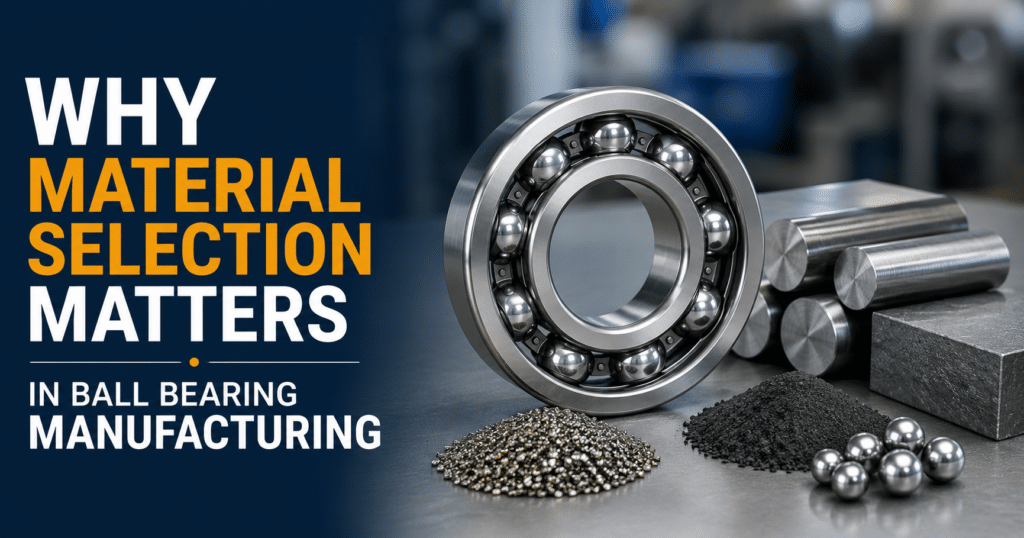
Ball bearings are among the most important components used in machinery, automobiles, industrial equipment, and even everyday household appliances. They help reduce friction, take on loads, and keep rotation moving smoothly. While bearing design matters a lot, the material used for ball bearing manufacturing plays a equally critical role in shaping performance durability, and dependability.
Picking the right material affects how a bearing performs when operating conditions change. A wrong material choice can cause early wear, corrosion, and even equipment failure. Meanwhile, a carefully selected, better grade material can improve energy efficiency and extend service life in a noticeable way.
The Importance of Material Selection
Bearings are frequently facing hard loads, fast rotations, wetness, grit, and temperatures that keep moving around . So the material used for ball bearing production has to deal with all of that, still staying strong, while not letting go of the exactness the system needs.
When manufacturers focus on the correct material, they can typically achieve:
- Higher load carrying ability, and also stronger support overall.
- Better wear resistance, even after long run time.
- Improved protection against corrosion, in wet or aggressive surroundings.
- Longer operational life. Less fretting, more stability.
- Reduced maintenance costs , and fewer service interruptions.
So yeah, this mix of advantages makes material selection a crucial matter in modern bearing manufacturing.
Common Materials Used in Ball Bearings
High-Carbon Chrome Steel
This is the material most frequently used for ball bearing manufacturing. It provides strong hardness, good tensile strength, and solid resistance to wear. Owing to its durability and practical pricing , it shows up in automotive, industrial equipment, and similar roles.
Stainless Steel
Stainless steel bearings are chosen when moisture or certain chemicals are in the picture. They give off a very strong resistance against corrosion, and you can find them used in food processing, medical devices, and marine environments too.
Ceramic Materials
Ceramic balls are lightweight, very robust, and steady under heat. They create less friction compared to steel, and they are commonly seen in high speed, and high precision applications.
Engineered Plastics
A few light weight applications lean on upgraded plastic materials, a bit more technical than you might expect. These kinds of bearings provide strong protection against corrosion and they generally require very little lubrication, which makes them a good fit for certain industries where downtime, and maintenance, really matter.
How Material Changes Bearing Performance
The chosen material ends up affecting quite a few performance pieces. In general, harder materials resist wear more effectively and keep dimensional accuracy longer. Corrosion-resistant materials do well in wet, humid, or chemically aggressive settings. Lighter materials can help reduce friction and support higher operating efficiency.
Also, the material used for ball bearing components affects how far the bearing can handle heat. Bearings working near extreme temperatures need materials that stay structurally stable without deforming or losing strength.
Kewa Bearings and Quality Manufacturing
At Kewa Bearings, material quality stays the main thing during the entire production process. Choosing suitable raw materials helps make sure performance stays consistent, the bearings last longer, and everything works reliably across many industrial uses.
When quality materials are paired with advanced manufacturing standards, Kewa Bearings produces bearings meant for modern industries’ day to day demands. At the same time, the focus remains on long service life and operational efficiency, even when the environment gets harsh.
Conclusion
A ball bearing’s success is not only about the design. The material used for ball bearing manufacturing affects strength directly, surface wear resistance, corrosion protection and the final overall results. If you look at chrome steel, stainless steel, ceramic, or engineered plastic, choosing the proper material helps enable longer life, and smoother operation. For industries chasing steady output, putting money into good material becomes a key step toward dependable machinery working right.
FAQs
1. Can ball bearings be made from more than one material?
Yeah, in practice some ball bearing designs mix different materials, so the durability gets a boost and performance stays steady.
2. Which material is best for wet environments?
Stainless steel is usually the go to choice, because it resists corrosion very well and keeps running without that quick degradation.
3. Are ceramic bearings completely metal-free?
Not always, a lot of hybrid bearings include ceramic ball elements, yet they still use steel for the races so the fit and wear behavior stay dependable.
4. Does material selection affect bearing noise levels?
Yes, material decisions can influence friction behavior, vibration patterns, and in turn the operating noise.
5. Why are high-quality raw materials important in bearing production?
Because they improve consistency, strengthen reliability, and extend service life, even when the conditions are not gentle.