
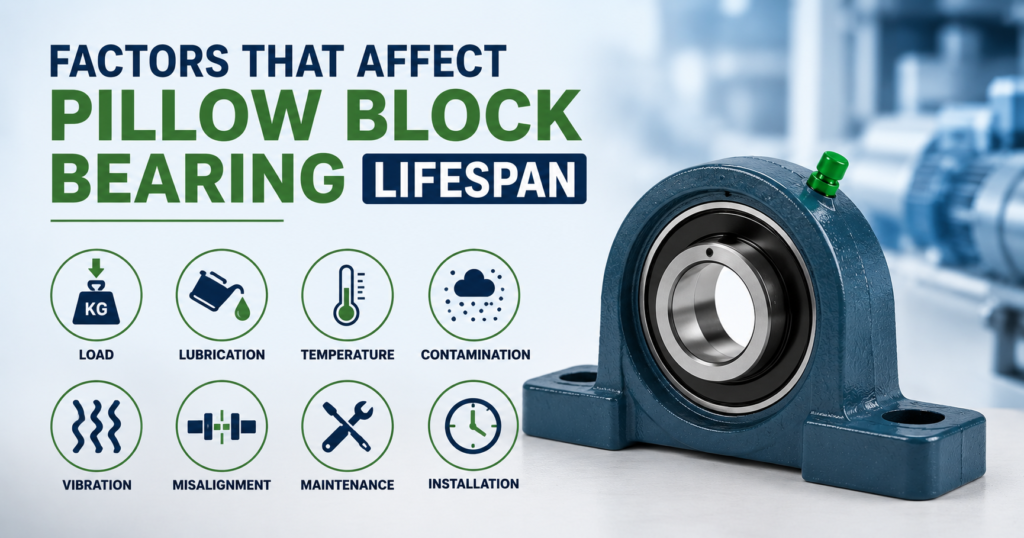
The pillow block bearing lifespan can really swing a lot, largely because operating conditions, how it gets maintained, and the installation quality all play a part. In real use these bearings show up in industrial machinery, conveyor lines, pumps, and agricultural equipment, mainly to help hold rotating shafts steady and keep motion moving smoothly. If you understand what affects the bearing life then it becomes easier to cut down downtime, reduce ongoing upkeep expenses, and improve overall equipment reliability even when conditions change slightly.
Load and Operating Conditions
A big thing that messes with the service life of a pillow block bearing is the load that ends up on the bearing. These bearings are typically made for a particular load span, so when there are too much, or even surprise loads, they can end up aging faster than expected.
Heavy loads add internal stress, and that tends to make parts wear faster, run hotter, and in bad cases fail. So picking the right bearing size and correct specification for the job is essential if you want the best possible service duration.
Proper Lubrication
Proper greasing reduces friction, warmth, and abrasion in pillow block bearings. When there is too little lubricant, metal to metal contact can happen, but with too much, temperatures may rise, and contaminants tend to gather. Sticking to the manufacturer’s lubrication instructions helps push the bearing service life longer and keeps the operation running in a smooth way.
Alignment Accuracy
When the shaft is not aligned correctly, the bearing components take uneven loads. Even small misalignment can lead to vibration, audible noise, and earlier deterioration.
During installation, proper alignment of the shaft and housing should be carefully checked, like really checked. Regular inspections can identify alignment issues before they cause significant damage, or at least before they do the big costly stuff.
Contamination and Environmental Factors
Dust, dirt, moisture and chemicals are pretty common reasons a bearing fails. Contaminants often wind up in the bearing housing, and then they mess with the rolling elements and the raceways.
Using seals of higher quality and choosing bearings that match the operating environment can help guard against that contamination. When the operating conditions stay clean, pillow block bearing service life can improve a lot.
Operating Temperature
Extreme temperature swings can mess with bearing performance a lot. When it gets too hot the lubricants can start to break down and the bearing materials can lose their strength, also very cold conditions can lower lubricant effectiveness.
Keeping an eye on the operating temperature, and providing proper cooling when it is needed, helps sustain bearing efficiency while preserving durability too.
Installation Quality
Most importantly, the following keywords and phrases must appear in the final output text. Here is the list:
pillow block bearing lifespan
Improper installation is a big reason for premature bearing failure. Excessive force during mounting, incorrect tools, or poor fitting can harm bearing components even before operation starts, like right after assembly.
If you use proper installation techniques and follow the manufacturer guidelines it helps make sure you get optimal performance from the very beginning.
Regular Maintenance
Routine checks are essential for maximizing bearing life. The maintenance team should pay attention to vibration levels, noise, temperature, and lubrication conditions.
Catching early signs of wear or damage, lets you take corrective action faster, and it can prevent expensive breakdowns while extending the overall pillow block bearing lifespan.
Conclusion
The pillow block bearing lifespan is never just a number, because it can ride on multiple day to day factors, like load conditions, proper lubrication, alignment, keeping contamination under control, temperature management, and even how good the installation really was. After that, regular maintenance matters too, and when businesses handle those things proactively, they usually see better equipment reliability, less downtime, and more overall value from the bearing investment. Also, picking quality pillow block bearings from trusted manufacturers, such as Kewa Bearings, supports long-term performance in a really practical way.
FAQs
1. How long does a pillow block bearing usually last?
It really depends on the load you’re applying, how it’s used, how well it’s maintained, and the whole set of operating conditions.
2. What is the most common cause of pillow block bearing failure?
Often it comes down to poor lubrication, and also contamination in the wrong places that combination tends to ruin things.
3. Can misalignment harm a pillow block bearing?
Yes, if the alignment is off then the bearing gets uneven stress, and that speeds up wear and deterioration.
4. How often should a pillow block bearing be lubricated?
That schedule isn’t fixed, it depends on the specific application and the environment around it.
5. Why is checking the bearing regularly a big deal?
Because inspections help you catch emerging issues early, so you can prevent sudden failures that are unexpected.