
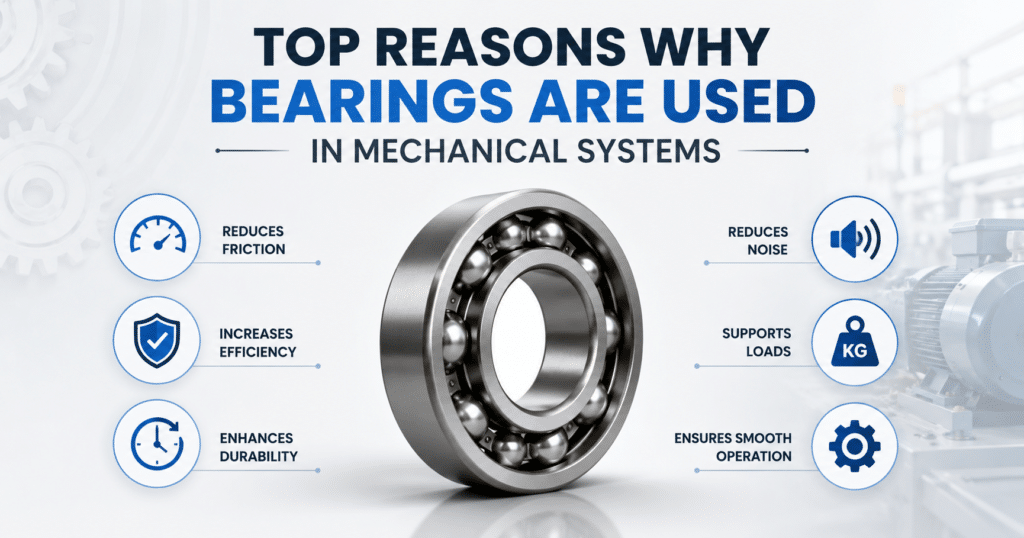
Industrial machinery relies on parts working together without failing. Whether looking at heavy mining equipment or simple conveyor belts, components must move smoothly. If they don’t, production stops and hardware breaks down. At the center of this movement is a critical device keeping everything on track. To maintain equipment properly, you must understand exactly why bearing is used across these setups. These components keep the industrial world from grinding to an expensive halt. At Kewa Bearings, we focus on engineering the rugged durability and precision your machinery needs to run day after day without unexpected interruption.
1. Cutting Down Friction to Save Energy
When two metal parts slide directly against each other, they create a massive amount of friction. This resistance generates intense heat, saps engine power, and causes rapid wear on expensive machinery surfaces. One of the main reasons why bearing is used in engineering designs is to replace this destructive sliding movement with smooth rolling motion. By introducing precision-engineered balls or rollers, the rotating shaft meets minimal resistance. This shift to rolling friction optimizes power transmission throughout the system. It lowers your overall energy consumption and prevents severe thermal lockups that can instantly destroy heavy-duty industrial setups during peak operational hours.
2. Handling Heavy and Complex Loads
Industrial machinery handles a lot of harsh physical stress during its everyday work. Usually, these forces come in from two different directions,more or less at the same time, like it’s sort of one after another but not really, and you feel it immediately. There are radial loads that push in a perpendicular way to the shaft, and then axial loads that run parallel along its length. If the system does not have proper support the shaft ends up bending, it can start to vibrate, and in worst cases it just snaps under the ongoing pressure.
So when people wonder why bearing is used in heavy machinery, load management basically becomes the headline engineering point. Bearings act like real structural bases, they absorb those forces and then spread them out in a more even fashion across the whole machine. Whether you use a deep groove ball bearing for radial pressure or a custom thrust bearing for axial forces, the goal stays the same: the equipment should remain solid and reliable, instead of failing over time.
3. Maintaining Precision and Rotational Accuracy
On high speed production lines, even a tiny fraction of a millimeter of misalignment causes destructive vibrations and loud noise too. Bearings hold rotating shafts in their exact alignment, keeping high accuracy through millions of nonstop turns. When you point out why bearings get used in automated assembly lines it makes the need pretty obvious, for strict tolerance levels. The rigid positioning prevents gears from wobbling out of control. In automated industries where precision is critical—like robotics or aerospace manufacturing—reliable bearings help preserve smooth operation over long production cycles.
4. Protecting High-Value Machinery Components
Replacing a damaged motor shaft, customized gear assembly, or large main housing is incredibly expensive and derails your production schedule. Bearings are deliberately designed to act as sacrificial parts within a mechanical system. Since they take the brunt of daily wear, and tear, these parts help shield the pricier components from degradation. This economic protection is another classic reason why bearing is used across diverse industrial sectors. It is far cheaper and quicker to perform routine maintenance and swap out a worn bearing than to replace an entire machine drive, helping lower your long-term maintenance budgets.
Conclusion: Choose Reliability with Kewa Bearings
Efficient machinery requires top-tier component engineering. High-performance bearings cut power waste, handle intense physical loads, and keep factories running predictably. Ultimately, remembering why bearing is used helps businesses invest in the right technical parts. At Kewa Bearings, we build world-class products tailored for your specific operating environment. Check out our product line today to keep your business moving forward.
Frequently Asked Questions (FAQs)
Q1: What happens if a machine runs without bearings?
A: Bare metal ends up rubbing on bare metal, and there’s intense friction plus heat. The parts will get warped fast, waste a huge amount of power and then basically lock up the whole machine.
Q2: Can one bearing manage different forces at once?
A: Yes, some can. Normal ones tend to prefer just one direction, but certain specialized kinds ( like tapered roller bearings ) are made to juggle side-to-side and up-and-down loads together, at the same time.
Q3: How do bearings help factories go green?
A: They reduce drag so motors don’t have to strain as much when moving heavy components. That lowers electricity bills , and also reduces the factory’s carbon footprint overall.
Q4: What are the key signs a bearing is starting to fail?
A: Listen for loud grinding or squeaking sounds, watch for odd vibrations in the machine, or notice if the metal casing feels far too hot , even for a short moment.
Q5: Can bearings be made for extreme heat or wet areas?
A: Yes, definitely. Custom units use ceramic or stainless steel, with close seals so they can manage extreme temperatures, heavy moisture, or even harsh chemicals without too much trouble.